



You know that feeling when you’re juggling everything—planning birthdays, checking in on your partner’s bad day, smoothing over arguments, and still being the one who remembers to buy milk? That invisible weight you carry? That’s emotional labor.
It’s not about who does the dishes or who takes out the trash. It’s about who keeps track of the mental and emotional “glue” that holds the relationship together. And the truth is, in many couples, one person quietly carries far more of that load than the other.
The tricky part? Emotional labor is hard to spot. It doesn’t always show up on chore charts or in bank accounts. But if left unchecked, it can erode connection, build resentment, and make even strong relationships feel unbalanced.
Let’s break down what emotional labor is, why it matters, the signs you might be carrying too much of it, and how to finally start sharing the weight.
What Is Emotional Labor in Relationships?
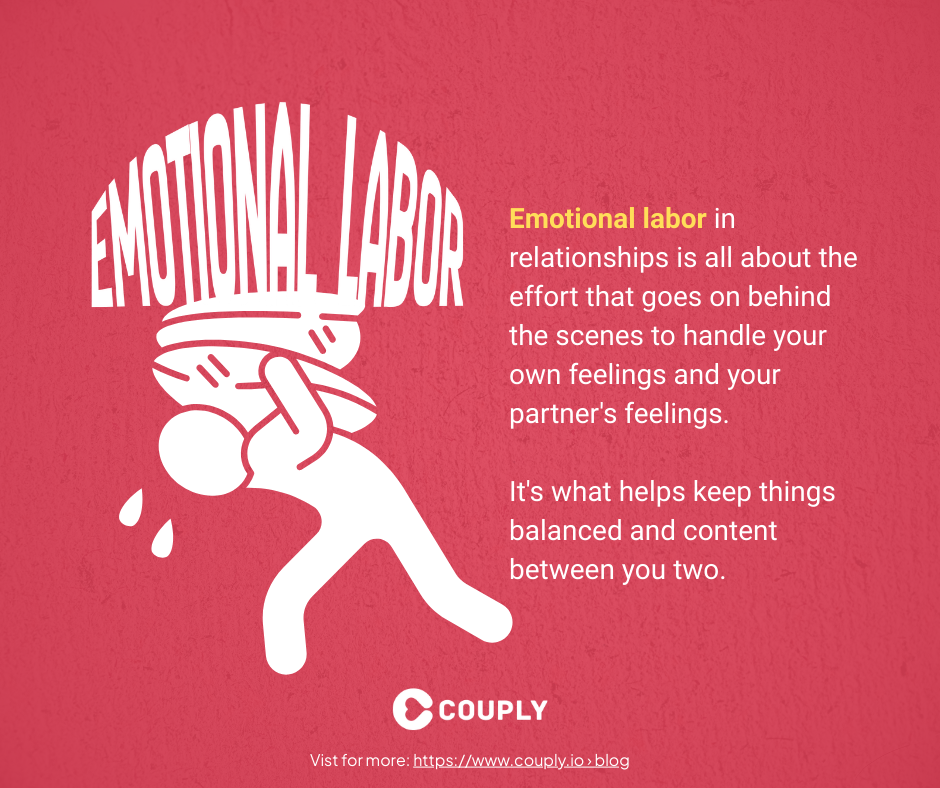
Originally, emotional labor was a workplace concept. Sociologist Arlie Hochschild coined the term in her 1983 book The Managed Heart to describe how service workers manage emotions on the job — like flight attendants who keep smiling through turbulence or servers who stay calm when customers are rude.
Over time, the term evolved beyond the workplace and found its way into discussions about relationships. In this context, emotional labor refers to all the invisible, often unacknowledged effort that goes into keeping a relationship emotionally balanced and functioning smoothly.
It’s the planning, remembering, comforting, and managing of feelings — both your own and your partner’s — that help maintain harmony and connection.
Examples of Emotional Labor in a Relationship
Emotional labor in relationships often shows up in small, everyday moments that keep things running smoothly — even if they’re not always noticed. Here are some common examples:
- Being the emotional support system – Always being the one to listen, comfort, or cheer up your partner when they’re upset.
- Managing conflict – Taking the lead in calming arguments, apologizing first, or finding ways to keep the peace.
- Remembering important dates – Birthdays, anniversaries, doctor’s appointments — basically being the “memory keeper” for the relationship.
- Checking in on feelings – Regularly asking, “Are you okay?” or “How are we doing?” to make sure the relationship feels balanced.
- Planning and organizing – Handling schedules, vacations, meals, or social plans so your partner doesn’t have to think about it.
- Monitoring moods – Adjusting your behavior to avoid upsetting your partner or to keep the atmosphere positive.
- Taking on household mental load – Keeping track of chores, bills, or errands — not just doing them, but remembering they need to be done.
- Managing your own emotions to protect your partner – Hiding your frustration, sadness, or stress so they don’t worry.
It’s all the behind-the-scenes emotional work that helps the relationship feel safe, organized, and cared for — but it can be draining if one person is doing most of it.
Types of Emotional Labor
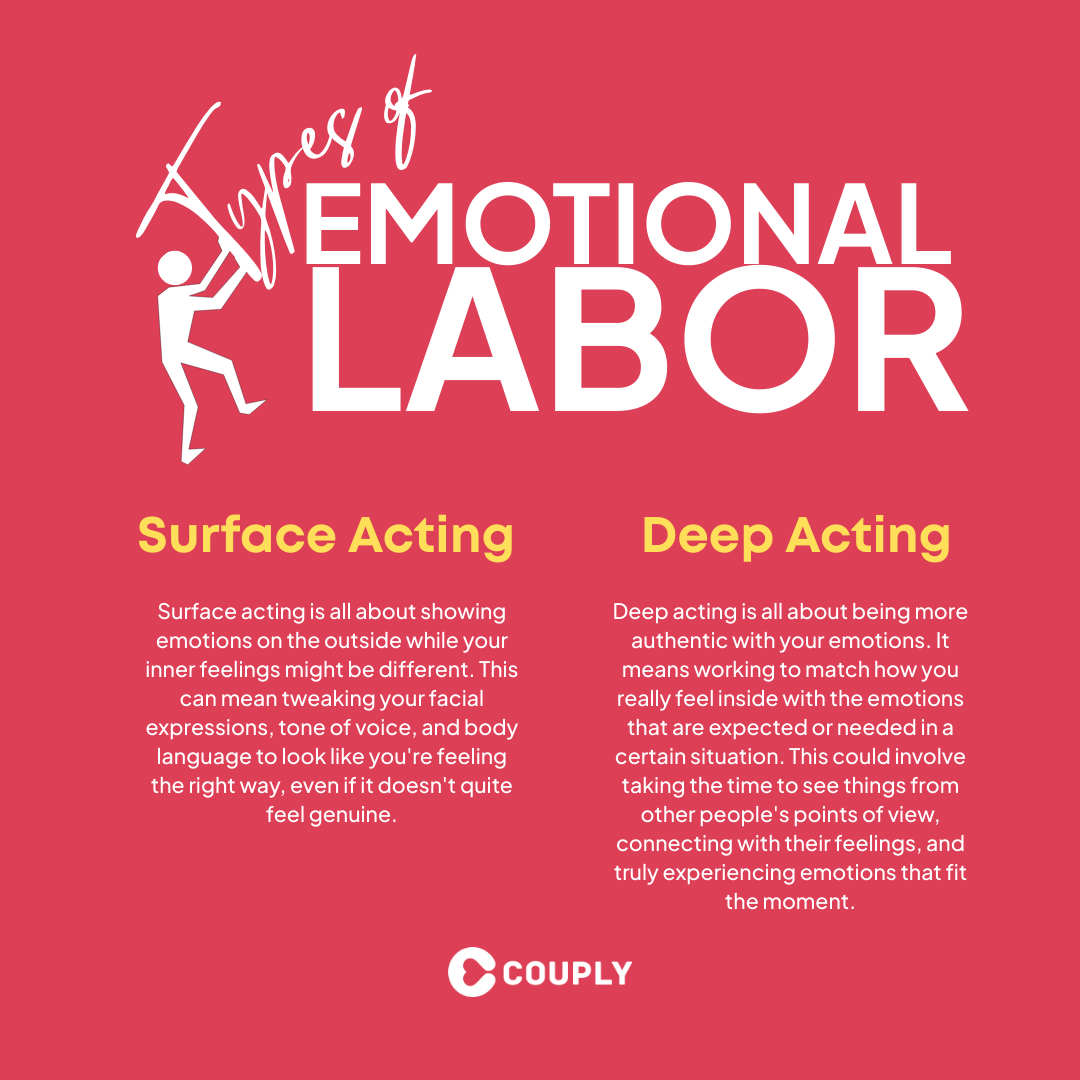
So, emotional labor isn’t just one thing — it actually comes in a couple of forms. Sociologists, including Dr. Arlie Hochschild (the one who first came up with the term), describe two main types: surface acting and deep acting.
1. Surface Acting
This is when you pretend to feel something you don’t — basically, you’re putting on an emotional mask. For example, smiling when you’re upset so your partner doesn’t worry, or acting calm when you’re actually frustrated. You’re managing how you appear on the outside, even if it doesn’t match how you feel inside.
2. Deep Acting
This one goes a bit deeper. Instead of just faking emotions, you try to actually feel the emotion that fits the situation. Like reminding yourself why you love your partner when you’re irritated, or trying to genuinely feel empathy during a disagreement. It’s about adjusting your inner emotions, not just your outer reactions.
Both types happen in relationships — sometimes without you even noticing. But being aware of them can help you understand your own emotional patterns (and your partner’s!) a lot better.
Why Balanced Emotional Labor Matters
When emotional labor in a relationship isn’t balanced, it can start to feel really heavy for one person. You know that feeling when you’re always the one checking in, planning things, or keeping the peace? Yeah, that can get exhausting over time.
When both partners share emotional labor, though, everything just flows better. You both feel seen, supported, and cared for. It’s not just one person managing the emotional “to-do list” while the other coasts along. Instead, it becomes teamwork — a shared effort to keep your connection strong.
Balanced emotional labor also builds trust and closeness. It shows that both of you value the relationship equally and are willing to put in the effort to make it work. Plus, it helps prevent resentment — because, let’s be real, nothing kills romance faster than feeling like the only one doing all the emotional heavy lifting.
So, sharing emotional labor isn’t just about fairness — it’s about keeping love healthy, mutual, and sustainable. After all, relationships work best when both hearts are equally invested.
Signs You’re Carrying the Emotional Load Alone
It’s not always obvious when you’re the one doing most of the emotional heavy lifting. Emotional labor is sneaky because it doesn’t look like a pile of laundry or a sink full of dishes. It lives in your head and shows up in the little, everyday ways you manage the relationship. If these signs feel familiar, chances are you’re carrying more than your share.
1. You’re Always the One Who Brings Up Difficult Topics
Whether it’s money, intimacy, parenting, or in-laws, the heavy conversations never happen unless you’re the one to start them. You feel like the “relationship manager,” responsible for addressing problems before they explode.
2. You Keep the Calendar (and Everyone’s Brain) Running
Birthdays, holidays, doctor’s appointments, kids’ school events—these all live in your head or your phone calendar. You don’t just attend these events. You plan them, send reminders, and make sure no one forgets.
3. You Monitor the Emotional Climate
When tension rises, you’re the one stepping in to smooth things over. You cheer your partner up after a hard day, reassure them when they’re anxious, and manage the “vibe” in the household so everyone feels stable.
4. Your Support Feels One-Sided
You’re there when your partner needs a pep talk, a safe space to vent, or a confidence boost. But when you need the same support, you don’t get it—or you have to ask multiple times before your needs are met.
5. You Carry the Mental Load of Household Tasks
Even if chores are divided, you’re the one who notices what needs doing and keeps track of timelines. You don’t just take out the trash—you remind your partner it’s trash day, too. You don’t just do the grocery shopping—you’re the one who realizes the milk is gone.
6. You Anticipate Needs Before They’re Expressed
You pick up on your partner’s moods before they even say a word. You plan for their comfort, remember their preferences, and try to prevent problems before they happen. Meanwhile, your own needs may go unnoticed.
7. You Feel Constantly Drained
Even when the workload looks balanced on paper, you feel mentally and emotionally exhausted. That’s because the invisible part—the remembering, the worrying, the anticipating—isn’t shared.
Bottom line: If you’re always the one who plans, notices, and smooths things over, you’re carrying the emotional load. Recognizing these signs is the first step to naming the imbalance—and pushing for a healthier, more equal dynamic.
The Consequences of Unequal Emotional Labor
When one partner quietly shoulders most of the invisible work, the impact isn’t always immediate. At first, it might look like “things are fine” because the relationship keeps running smoothly. But underneath the surface, that imbalance starts to eat away at both the individual and the couple. Over time, it can become one of the most damaging dynamics in a relationship.
1. Resentment Builds Like Rust
Carrying the bulk of emotional labor can leave you simmering with frustration. You might bite your tongue at first, but eventually the unspoken thought takes root: Why am I the only one holding everything together? That resentment doesn’t stay hidden—it leaks into tone, body language, and intimacy. Even small disagreements can explode because they’re layered on top of months or years of unacknowledged imbalance.
2. Intimacy Starts to Fade
Desire thrives on mutual care and respect. When one partner feels like the “parent” and the other feels like the “child,” attraction often takes a hit. It’s hard to feel turned on by someone who doesn’t carry their share of the load. Emotional imbalance quietly chips away at sexual connection and leaves couples feeling more like roommates than lovers.
3. Communication Breaks Down
Unequal emotional labor breeds silence. The overloaded partner may stop speaking up because they’re tired of repeating themselves. The other partner may avoid hard conversations because they don’t realize how bad things have gotten. Eventually, important issues never get talked about at all.
4. Stress and Burnout Take Over
Carrying invisible work is exhausting. The mental checklist running in the background—meals, bills, birthdays, emotions, arguments—creates chronic stress. Over time, this can lead to anxiety, fatigue, and even physical health problems. And because it’s invisible, the overloaded partner often doesn’t get validation or support for the exhaustion they feel.
5. Imbalance Fuels Power Struggles
Relationships work best when both partners feel like equals. Unequal emotional labor upsets that balance. The person doing more starts to feel taken for granted, while the other may feel nagged or criticized. These power struggles create tension that bleeds into every corner of the relationship.
6. The Relationship Risks Collapse
Left unchecked, unequal emotional labor can become the silent deal-breaker. Many breakups and divorces don’t happen because of explosive fights but because of years of slow erosion. When one partner feels unsupported and unseen, the foundation of the relationship eventually cracks.
The truth: unequal emotional labor doesn’t just make you tired. It reshapes the entire relationship. It breeds resentment, kills intimacy, and chips away at trust. And while the effects may start small, they can snowball into something much harder to repair if left ignored.
Why Emotional Labor Is Often Unequal
It doesn’t usually happen because one partner is malicious. More often, it’s the result of cultural norms, habits, or blind spots.
1. Gender Conditioning
Many women are taught from childhood to be caregivers and emotional managers. They absorb responsibility for feelings, schedules, and harmony—while men are often socialized to focus on tasks or external achievements.
2. Default Household Roles
Without conscious planning, couples fall into traditional patterns: one partner cooks, cleans, and nurtures; the other provides or takes a step back. These roles can stick even in modern households.
3. Personality Differences
Some people are naturally more attuned to emotions, while others avoid conflict or miss subtle cues. That difference can leave one person doing more of the emotional heavy lifting.
4. Lack of Awareness
Often, the partner not carrying the load doesn’t even realize it exists. Emotional labor is invisible. If no one names it, it doesn’t get addressed.
How to Rebalance Emotional Labor
The good news: imbalance isn’t permanent. Relationships can shift toward equality when both partners commit to change.
Step 1: Start the Conversation
Bring it up directly. Use “I” statements: “I feel like I’m carrying the emotional load, and I need us to share it more equally.”
Step 2: Make the Invisible Visible
List the tasks you do—both physical and emotional. Include things like remembering birthdays or comforting your partner after a bad day. Sometimes seeing it in black and white makes the imbalance undeniable.
Step 3: Divide With Intention
Don’t default to traditional roles. Talk about what each of you is willing and able to take on. Share responsibilities based on fairness, not habit.
Step 4: Practice Emotional Awareness
Both partners need to tune in. That means noticing moods, asking questions, and being willing to step in when the other person is overloaded.
Step 5: Check In Regularly
Life changes. So do needs. Revisit the conversation often to make sure balance is maintained.
Setting Boundaries and Protecting Your Energy
If you’ve been carrying the emotional weight in your relationship, change doesn’t happen overnight. While you’re working on rebalancing with your partner, you also need to protect yourself. Boundaries are how you keep from running on empty.
1. Learn to Say No Without Guilt
Being the “fixer” or the “emotional manager” often means you say yes out of habit. Yes to smoothing arguments, yes to keeping the calendar, yes to cheering your partner on even when you’re depleted. Saying no doesn’t mean you don’t care. It means you care about your own well-being too.
2. Stop Anticipating Everything
If you’re used to reading moods and predicting needs before they’re spoken, it’s time to step back. Let your partner articulate what they need. Don’t jump in to prevent every problem. Giving up some control opens the door for them to step up.
3. Prioritize Self-Care Like It’s Non-Negotiable
Protecting your energy means carving out space for yourself. That might look like quiet time, hobbies, therapy, or simply rest. Recharging isn’t selfish—it’s how you regain the capacity to show up fully in your relationship without feeling resentful.
4. Ask Directly for Support
Don’t hint. Don’t wait for your partner to notice. Spell it out: “I need you to handle the grocery list this week” or “I’m drained, can you take over bedtime?” Clear asks help distribute the load instead of letting it silently pile on you.
Boundaries don’t build walls. They create balance. They remind both you and your partner that you’re not a bottomless well of energy, and that your needs matter too.
When to Seek Professional Help
Sometimes rebalancing emotional labor feels impossible on your own. You try to talk, but the same arguments keep circling. Or your partner doesn’t see the problem, no matter how many times you explain. That’s when outside support can make the difference.
Signs It’s Time to Reach Out
- You feel chronically resentful and nothing changes.
- Conversations about balance always turn into fights.
- Your needs are dismissed or minimized.
- The emotional disconnection has started to affect intimacy.
- You feel more like a parent, therapist, or manager than a partner.
How Therapy Helps
A couples therapist acts as a neutral guide. They help make the invisible visible by unpacking how emotional labor shows up in your relationship. With structured conversations, you and your partner can pinpoint where the imbalance lies and agree on practical ways to shift responsibilities.
Seeking help isn’t a failure. It’s a sign of commitment. Therapy isn’t about blaming one person—it’s about finding better ways to function as a team. Think of it as a relationship tune-up, not a last resort.
What to Expect
Professional support may involve:
- Exercises to make the emotional workload visible.
- Communication strategies that prevent repetitive arguments.
- Tools for dividing responsibilities more fairly.
- Support for unpacking deeper issues like gender roles, childhood conditioning, or avoidance patterns.
Therapy gives you both a space where the emotional load doesn’t sit on one person’s shoulders. It creates accountability, clarity, and the possibility of starting fresh.
The big picture: Setting boundaries protects your energy in the present. Professional help gives you the tools to build balance in the future. Together, they prevent emotional labor from being the silent killer of intimacy and connection.
Emotional labor isn’t flashy. It doesn’t show up on Instagram feeds or anniversary cards. But it’s the hidden heartbeat of relationships. When shared, it keeps couples close, supported, and resilient. When carried by one partner alone, it slowly erodes the foundation of love.
If you’ve recognized yourself in this article, don’t ignore it. Name it. Talk about it. Ask for change. Because carrying the load alone doesn’t make you strong—it makes you exhausted. And love should feel like a partnership, not a one-person show.


