


Every couple fights. Anyone who tells you otherwise is either lying or hasn’t spent more than a weekend together. Disagreements happen because two different people, with different upbringings, personalities, and stress levels, are sharing the same life.
The real question isn’t “Do you fight?” It’s “How do you fight?”
Because here’s the truth: conflict doesn’t have to be destructive. In fact, the happiest couples swear that their ability to fight well—not avoid fights—is what keeps them strong. Fighting fair means disagreeing in ways that solve problems, build understanding, and protect the relationship instead of burning it down.
Ready to learn how happy couples argue without destroying each other? Let’s dig in.
Why Fighting Fair Matters
Conflict gets a bad rap, but here’s the twist: it’s not the enemy. Sweeping issues under the rug creates more damage than actually facing them. And fighting dirty? That just turns your partner into the opposition instead of your teammate.
Healthy conflict, on the other hand:
- Clears the air before resentment piles up.
- Builds trust by showing that you can disagree and still love each other.
- Creates stronger problem-solving muscles.
- Strengthens intimacy because you know you can handle the hard stuff together.
In other words, fair fighting is like relationship CrossFit. It may not be pretty while you’re in the middle of it, but the long-term gains are worth it.
Common Mistakes Couples Make During Conflict
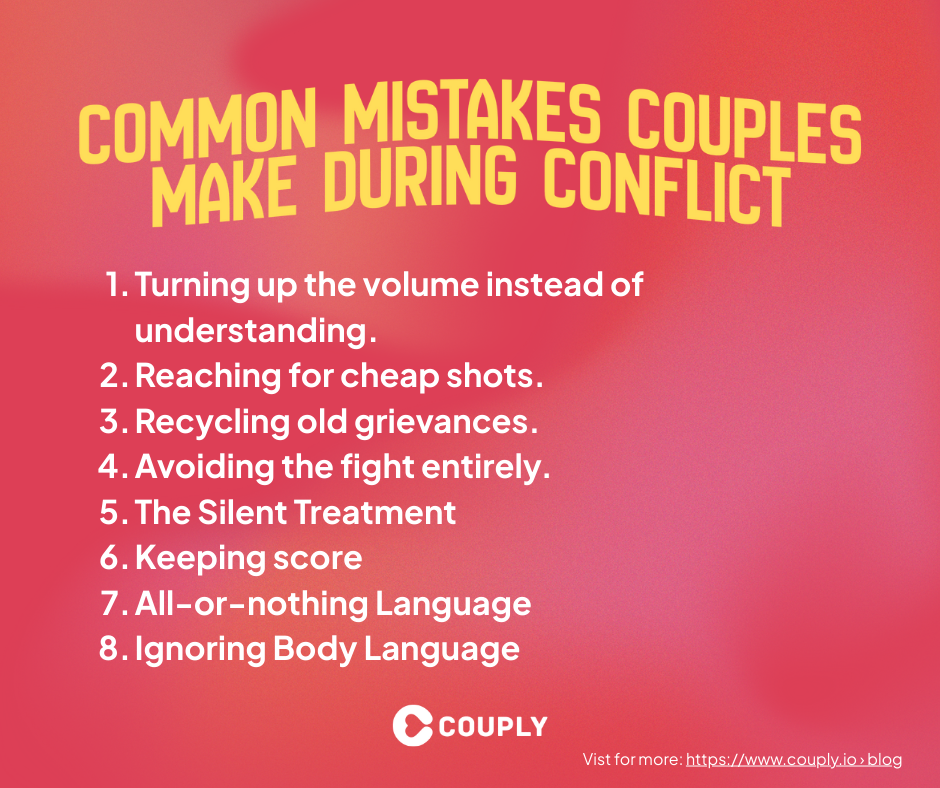
No couple is immune to slip-ups during a fight. Even the happiest partners sometimes let their tempers or old patterns hijack the moment. The problem isn’t that mistakes happen—it’s when they become habits. Here are the most common traps couples fall into when arguments get heated.
1. Turning Up the Volume Instead of the Understanding
Yelling feels powerful in the moment, but it rarely gets the point across. When voices rise, listening drops. The argument shifts from solving the problem to competing over who can shout the loudest. What could have been a discussion becomes a battle of wills.
2. Reaching for Cheap Shots
Name-calling, sarcasm, or jabs at sensitive topics (“You’re acting just like your mother”) hit harder than you think. Words linger long after the fight ends. They chip away at trust and intimacy, making future arguments even harder to resolve.
3. Recycling Old Grievances
Bringing up past mistakes during every fight turns your relationship into a courtroom where nothing is ever forgiven. Instead of focusing on the issue at hand, you’re dragging the weight of unresolved history into the present. It overwhelms the conversation and leaves your partner feeling attacked from every angle.
4. Avoiding the Fight Entirely
Some couples pretend nothing’s wrong, hoping the problem will dissolve on its own. But avoidance doesn’t erase tension—it stores it. Over time, the pressure builds until it either explodes or leaves one partner silently simmering with resentment.
5. The Silent Treatment
Withdrawing into silence might feel like a way to “keep the peace,” but it sends a message of disconnection. The partner on the receiving end feels shut out, and the issue never gets addressed. It’s less about cooling down and more about building walls.
6. Keeping Score
“Last week you messed up, so this week I get to be right.” Scorekeeping transforms love into a competition. Instead of working toward a shared solution, you’re both fighting to win, which means the relationship loses.
7. All-or-Nothing Language
Phrases like “You always” or “You never” are gasoline on the fire. They exaggerate, oversimplify, and make your partner feel unfairly judged. That defensiveness derails problem-solving and turns the argument into a personal attack.
8. Ignoring Body Language
Conflict isn’t only about words. Eye-rolls, dismissive sighs, or crossing your arms speak volumes. These signals communicate disdain or disinterest, even if your words don’t. The unspoken message? “I don’t respect this conversation.”
The big takeaway: Mistakes during conflict don’t doom a relationship. But when yelling, avoidance, or scorekeeping become your default style, every disagreement turns into a repeat of the last one. Recognizing these patterns is the first step toward breaking them—and shifting into fighting fair.
The Rules of Fighting Fair That Happy Couples Swear By
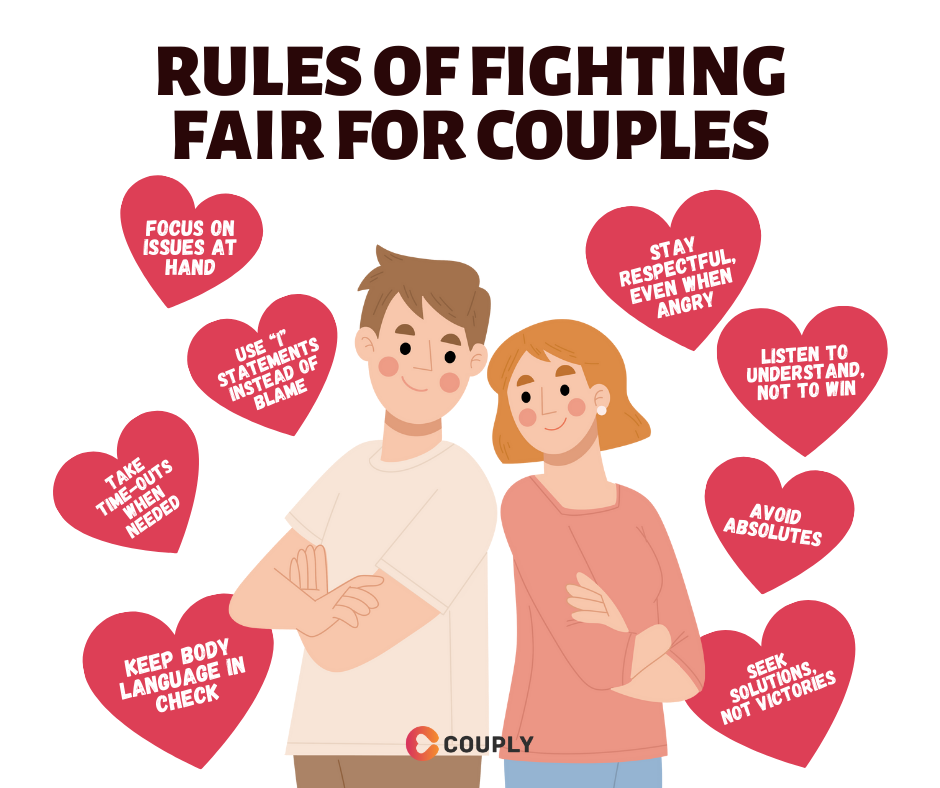
Think of these as relationship guardrails. They don’t stop fights from happening, but they keep you both from swerving into the ditch.
1. Focus on the Issue at Hand
When you’re upset, it’s tempting to dump everything on the table. Suddenly a fight about laundry becomes a fight about in-laws, money, and that time you forgot their birthday. Happy couples know better. They stick to one topic. It keeps the fight solvable instead of spiraling into chaos.
2. Use “I” Statements Instead of Blame
There’s a world of difference between:
- “You never listen to me!”
- “I feel unheard when you’re on your phone while I’m talking.”
One blames. The other invites understanding. Happy couples frame their feelings as personal experiences, not accusations.
3. Stay Respectful, Even When Angry
Respect doesn’t mean you won’t get mad. It means you won’t call names, use sarcasm as a weapon, or hit below the belt. Once respect leaves the room, so does trust.
4. Take Time-Outs When Needed
Sometimes the best thing you can say mid-fight is: “I need a break.” Walking away for 20 minutes to breathe or cool down doesn’t mean you’re avoiding the problem. It means you’re protecting the conversation from turning into a verbal brawl.
5. Listen to Understand, Not to Win
If you’re planning your rebuttal while your partner is talking, you’re not listening. Active listening means reflecting back what you heard: “So you’re saying you feel overwhelmed when I don’t help with dinner prep?” That simple step makes your partner feel validated—even before the issue is solved.
6. Avoid Absolutes
“You always” and “you never” are fighting words. They put your partner on the defensive immediately. Stick to describing specific behaviors instead of making sweeping statements about their entire character.
7. Keep Body Language in Check
Eye-rolling, sighing, crossing your arms—it all sends the message: I’m not taking you seriously. Happy couples pay attention to nonverbal cues as much as words. Open body language makes space for resolution.
8. Seek Solutions, Not Victories
The goal isn’t to win the fight. It’s to solve the problem. Happy couples remind themselves they’re on the same team. It’s not you vs. me. It’s us vs. the issue.
The Role of Emotional Regulation
Here’s the reality: fights don’t always happen when you’re calm and collected. They often pop up when you’re tired, stressed, or already annoyed. That’s why emotional regulation matters.
Learn to Pause
If your heart’s racing and your voice is rising, you’re in fight-or-flight mode. Nothing productive happens there. Pause, breathe, or call for a time-out before saying something you’ll regret.
Have Calming Tools Ready
- Deep breathing.
- A quick walk.
- Journaling raw thoughts before speaking them.
- Splashing cold water on your face.
It may sound basic, but regulating your emotions is like steering the ship back on course before it crashes.
How to Reconnect After a Fight
Happy couples don’t stop at fighting fair. They also know how to reconnect afterward. Because the argument isn’t the end of the story—it’s the reset button.
Apologize Without Excuses
A real apology sounds like: “I’m sorry I raised my voice. That wasn’t fair to you.” What it doesn’t sound like is: “I’m sorry, but you made me angry.”
Offer Reassurance
After conflict, your partner needs to know the relationship is still safe. A hug, a gentle word, or physical closeness helps stitch the bond back together.
Debrief the Fight
Once the dust settles, talk about what went well and what didn’t. “I liked how you told me directly what you needed. Next time, maybe I can take a break before I snap.” These mini debriefs make the next fight easier to navigate.
Find Closure
Reconnection doesn’t mean pretending the fight didn’t happen. It means closing it with understanding and care so it doesn’t linger in the background.
When Fighting Isn’t Fair Anymore
Not all fights are created equal. Some patterns cross the line from healthy conflict into toxic territory.
Red Flags to Watch For
Not every fight is healthy, even if you call it “communication.” Some conflict styles cross the line from tough but productive into toxic and damaging. These are the red flags that signal the way you fight may be hurting the relationship more than helping it.
1. Contempt
Eye-rolling. Mocking. Sarcasm dripping with venom. Contempt isn’t playful teasing—it’s showing outright disrespect. Relationship researchers call it the single biggest predictor of breakups and divorce, because it poisons trust. When contempt shows up, it’s not about solving a problem anymore—it’s about cutting the other person down.
2. Manipulation
Instead of honest conversation, one partner uses guilt-tripping, gaslighting, or emotional blackmail to get their way. Think lines like, “If you loved me, you’d agree with me” or “You’re overreacting, that never happened.” Manipulation erodes the sense of safety every couple needs to work through disagreements.
3. Stonewalling
This goes beyond taking a time-out. Stonewalling is when someone shuts down completely—refusing to respond, walking away indefinitely, or emotionally checking out. The message is, “You’re not worth my time.” Over time, stonewalling creates walls so high that intimacy can’t get through.
4. Escalation Without End
Every fight turns into an explosion, and once it starts, there’s no coming back down. Voices get louder, insults fly, and the original issue is buried under the chaos. If your conflicts always end with one or both of you emotionally wrecked, that’s a sign the way you’re fighting is unsustainable.
5. Emotional or Verbal Abuse
Arguments cross into dangerous territory when they involve threats, intimidation, or cruel words designed to control or belittle. This isn’t fighting fair—it’s abuse. And abuse, in any form, isn’t something that can be “talked through” without professional support and safety planning.
The bottom line: Normal conflict involves frustration, but it still respects the relationship. Red flags show up when the fight itself becomes toxic—when contempt, manipulation, or stonewalling replace respect, empathy, and care. Those patterns don’t fix themselves. They signal it’s time to hit pause, take a serious look, and get support before they do lasting damage.
When to Seek Help
If you’re stuck in cycles of destructive conflict, outside support can help. Couples therapy provides tools for fair fighting and gives you both space to break toxic patterns. Getting help isn’t admitting defeat—it’s choosing growth.
Every couple fights. The happiest ones don’t avoid it—they embrace it, knowing conflict can be a pathway to deeper connection.
Fighting fair means focusing on the issue, keeping respect intact, and remembering that you’re partners, not opponents. It’s not about eliminating disagreements. It’s about transforming them into opportunities for growth, understanding, and closeness.
So the next time tempers flare, pause and ask yourself: Am I fighting to win, or am I fighting to connect? The answer could be the difference between tearing each other down and building something stronger than ever.