



In the Couply Community (and if you haven’t downloaded the Couply App yet, this is your sign), people were asked one spicy and very controversial question that got everyone’s attention and immediately sparked strong reactions:
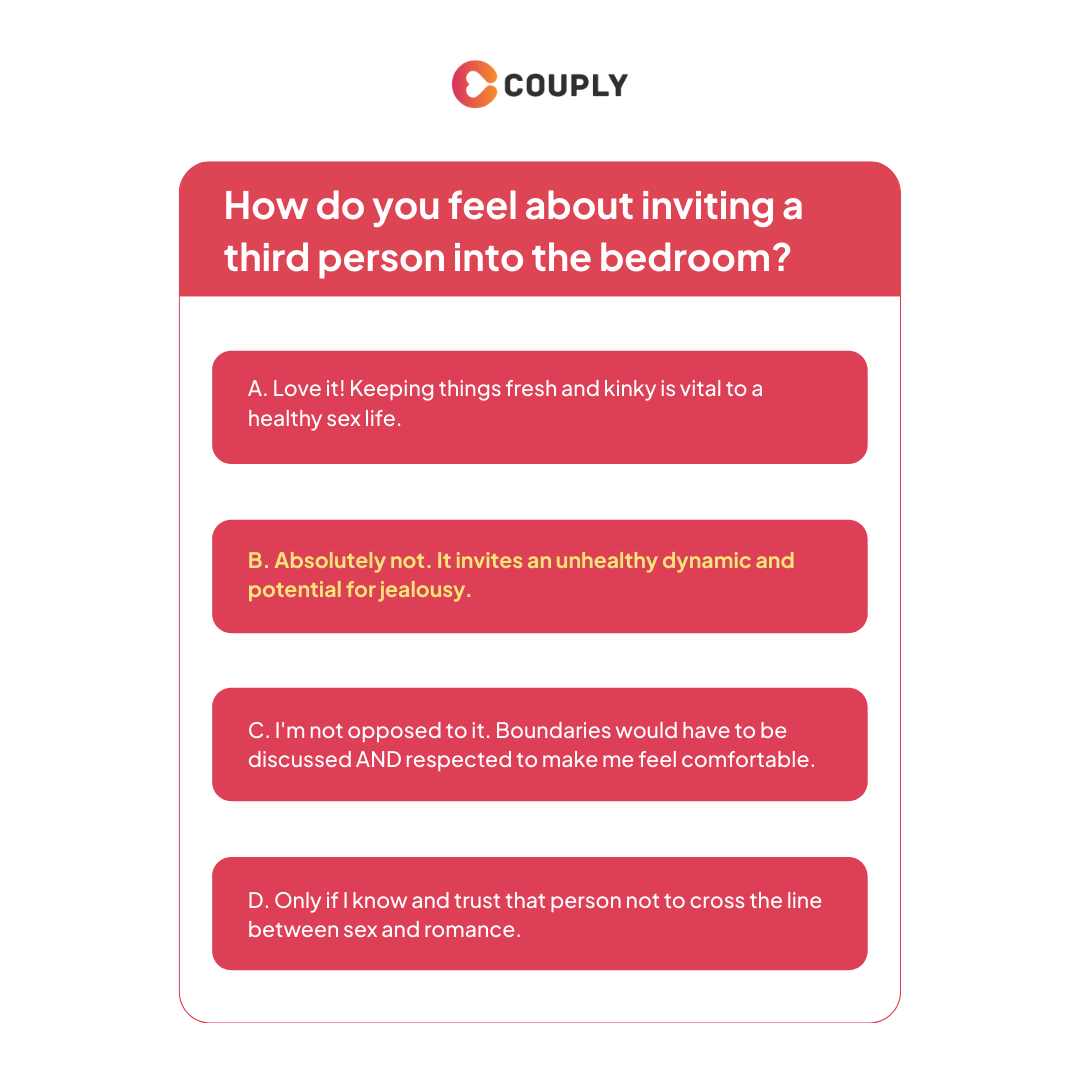
How do you feel about inviting a third person into the bedroom?
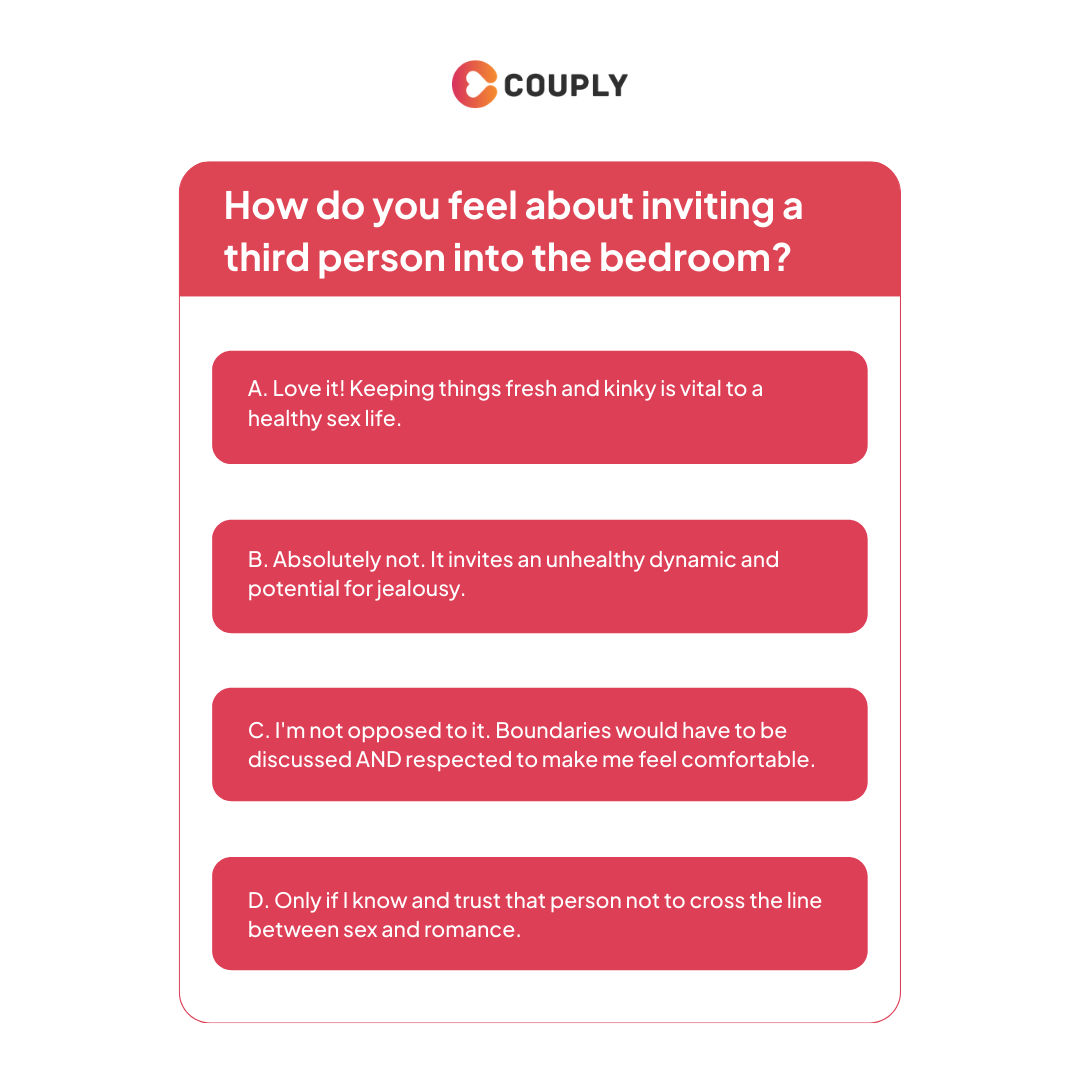
It’s a spicy question, yes, but it’s also an emotionally loaded one.
Before we unpack what the majority answered, let’s pause and talk about what this question actually means, because many couples use the same words but mean very different things.
What Does It Mean If a Couple Is "Looking for a Third"?
When people talk about “looking for a third,” they’re usually referring to inviting another person into their sexual or relational dynamic. This can range from a one-time sexual experience to a more ongoing arrangement. In some contexts, this is referred to as unicorn hunting.
What Is Unicorn Hunting?

Unicorn hunting is when a couple "looks for a third", often called a unicorn, to join them for a short period of time.
Unicorn hunters are sometimes called “unicorn poachers” and are often viewed as couples chasing a thrill rather than forming a genuinely respectful connection. In many discussions, this practice is criticized for treating unicorns more like experiences than real individuals with emotional needs. It’s also often associated with more traditional relationship dynamics that don’t always align with the values of the polyamorous or ethically non-monogamous community.
How Does a Unicorn Relationship Work?
A unicorn relationship is one where a couple brings in a third person, usually a bisexual or bicurious woman, to join them. This third person, referred to as the unicorn, is expected to connect with both partners.
Ideally, this setup emphasizes equality, trust, and respect. Clear communication is essential. The couple typically sets boundaries and expectations, and the unicorn enters the dynamic with an understanding of everyone’s needs and desires. Emotional and physical connections are built together, with ongoing conversations about safety, jealousy, and how everyone is feeling.
Unicorn Relationships vs. Throuples: What’s the Difference?
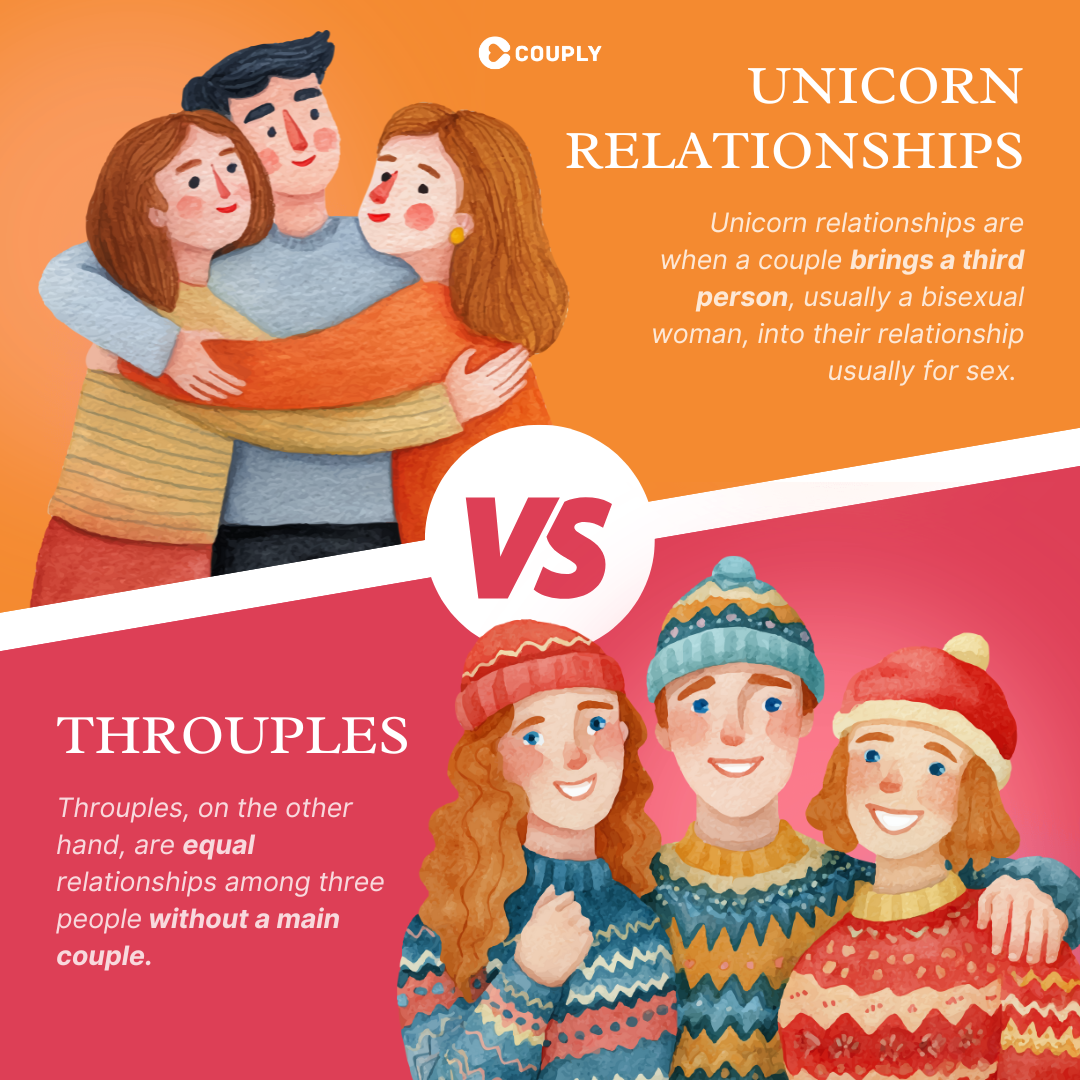
In a throuple, there is no “main” couple. All three people are equally committed to one another and are all in a relationship with each other.
Unicorn relationships, on the other hand, usually involve an established couple and a third person joining them. Throuples can be made up of people of the same gender, different genders, or non-binary individuals, while unicorn relationships are more commonly associated with straight couples and bisexual or bicurious women.
What Is a Unicorn in a Relationship?
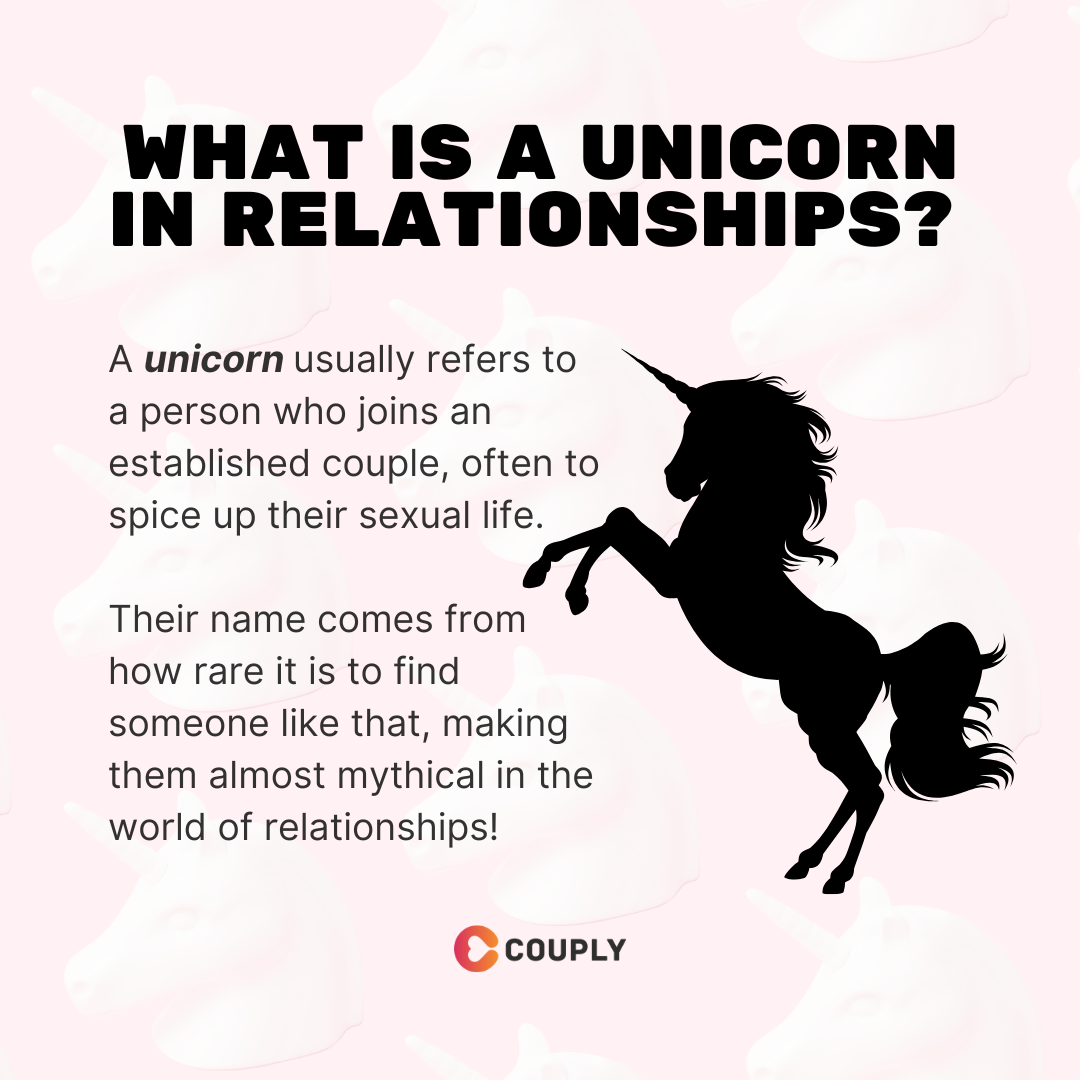
A unicorn is someone who enters an established relationship, often for sexual reasons. While unicorns are typically described as bisexual or bicurious women, anyone, regardless of gender, can be a unicorn.
For many couples, “looking for a third” simply means curiosity about a threesome, rather than a long-term relational arrangement.
What Is a Threesome?
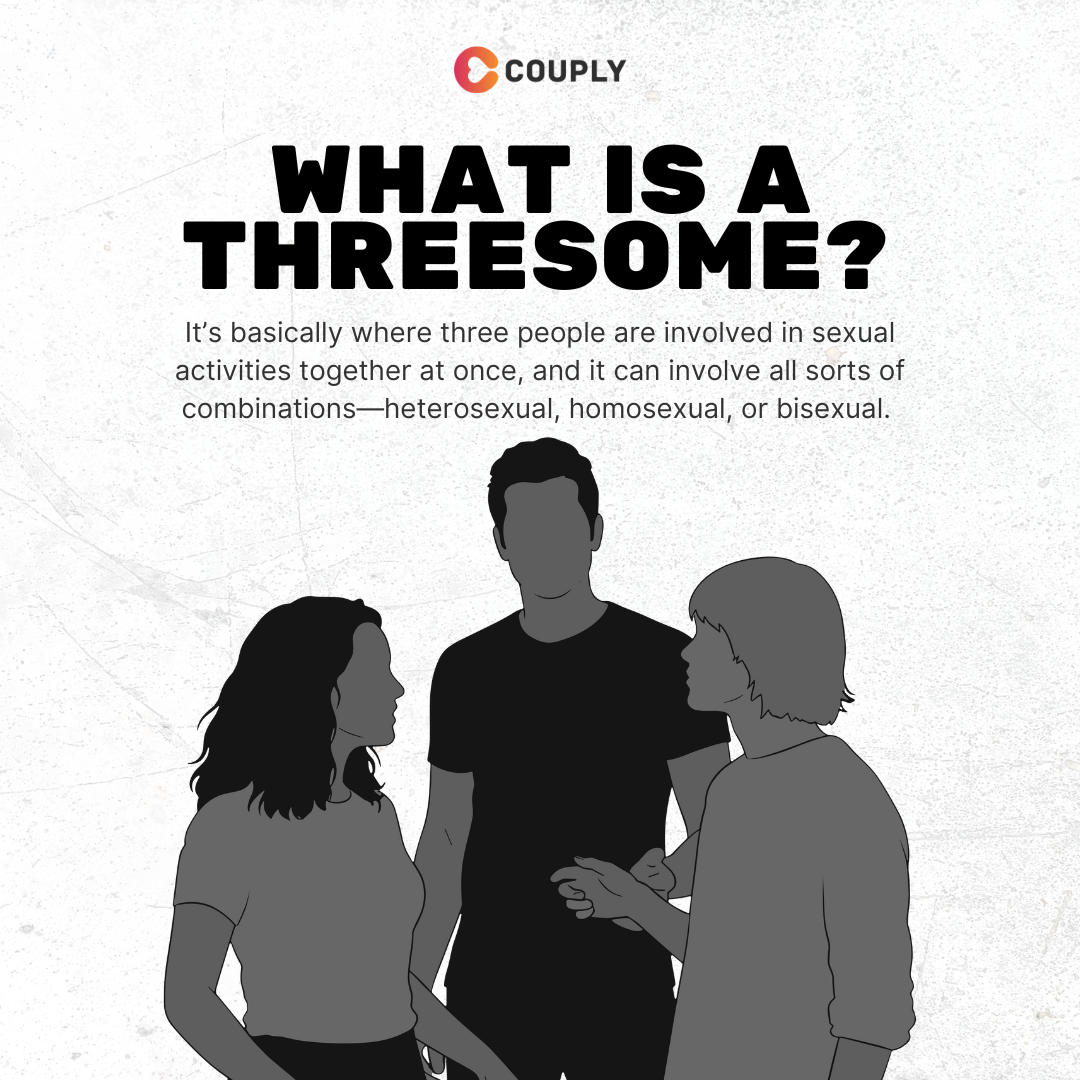
A threesome is when three people engage in sexual activity together. This can happen as a one-time experience, an ongoing arrangement, or as part of a polyamorous setup.
Threesomes are one of the most common sexual fantasies, which makes sense. They offer novelty, excitement, and a break from routine, all of which can feel appealing, especially in long-term relationships.
What Did the Couply Poll Reveal?
Now that we’ve laid the groundwork, let’s look at the poll results.
The majority, 53% of the Couply Community, chose:
“Absolutely not. It invites an unhealthy dynamic and potential for jealousy.”
This tells us something important. For many people, the concern isn’t morality or open-mindedness. It’s emotional safety.
Let’s Talk About the Responses
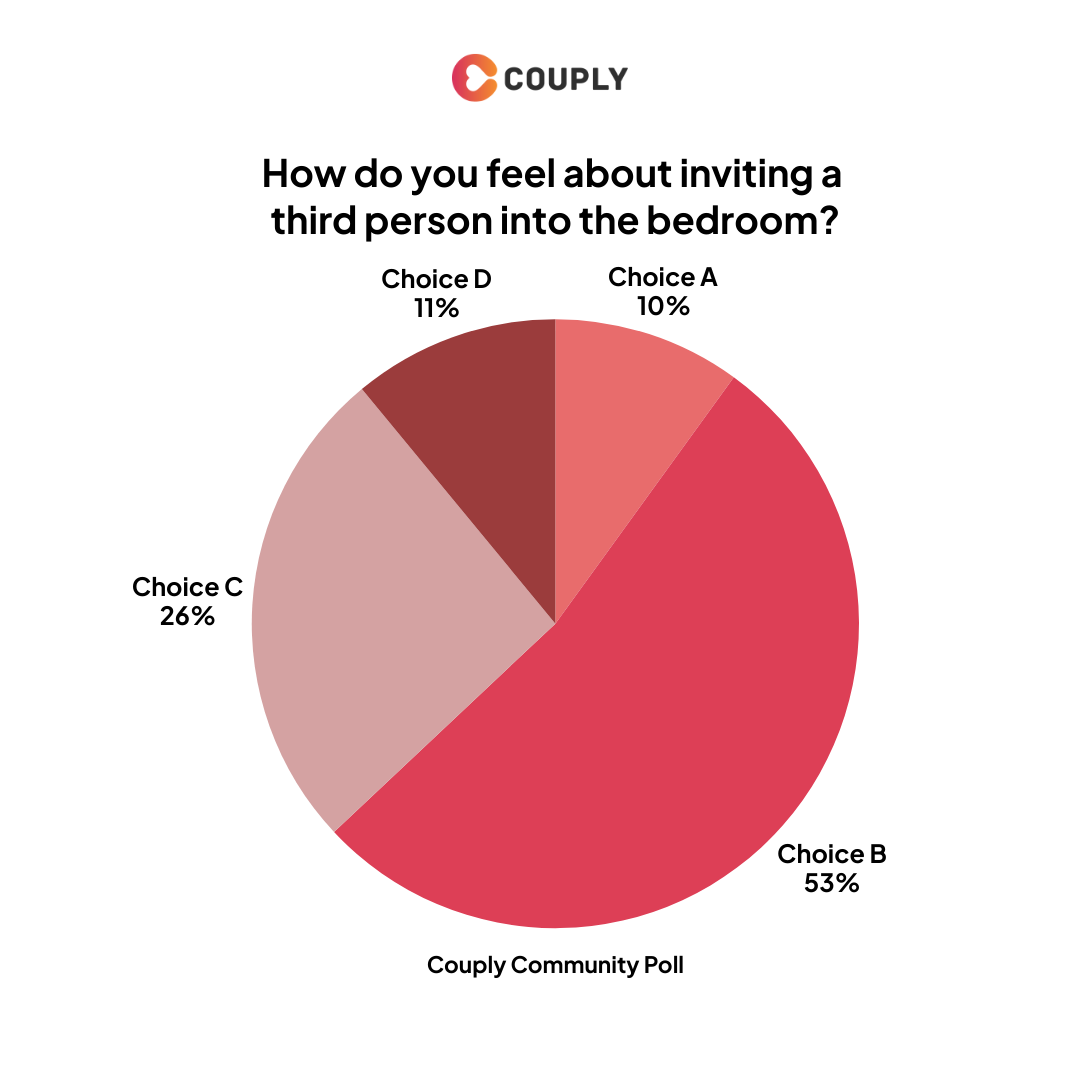
The next most common answer, at 26%, was:
“C. I’m not opposed to it. Boundaries would have to be discussed and respected to make me feel comfortable.”
This group reflects a more conditional openness. While threesomes are often considered taboo, these respondents aren’t rejecting the idea outright, but they’re clear that without strong boundaries, clear expectations, and mutual respect, the experience could easily become hurtful rather than exciting.
The next highest response was:
“D. Only if I know and trust that person not to cross the line between sex and romance.”
This highlights a common concern. For many people, it’s not sex itself that feels threatening, but the possibility of emotional attachment developing outside the primary relationship.
The Minority Response
Only 10% agreed with:
“A. Love it! Keeping things fresh and kinky is vital to a healthy sex life.”
For sexually adventurous and consenting couples, adding a third person can feel exciting and even reignite the spark in their relationship. Threesomes are a popular sexual fantasy, often because they offer novelty, exploration, and new forms of intimacy, also known as sexual novelty.
What Is Sexual Novelty?
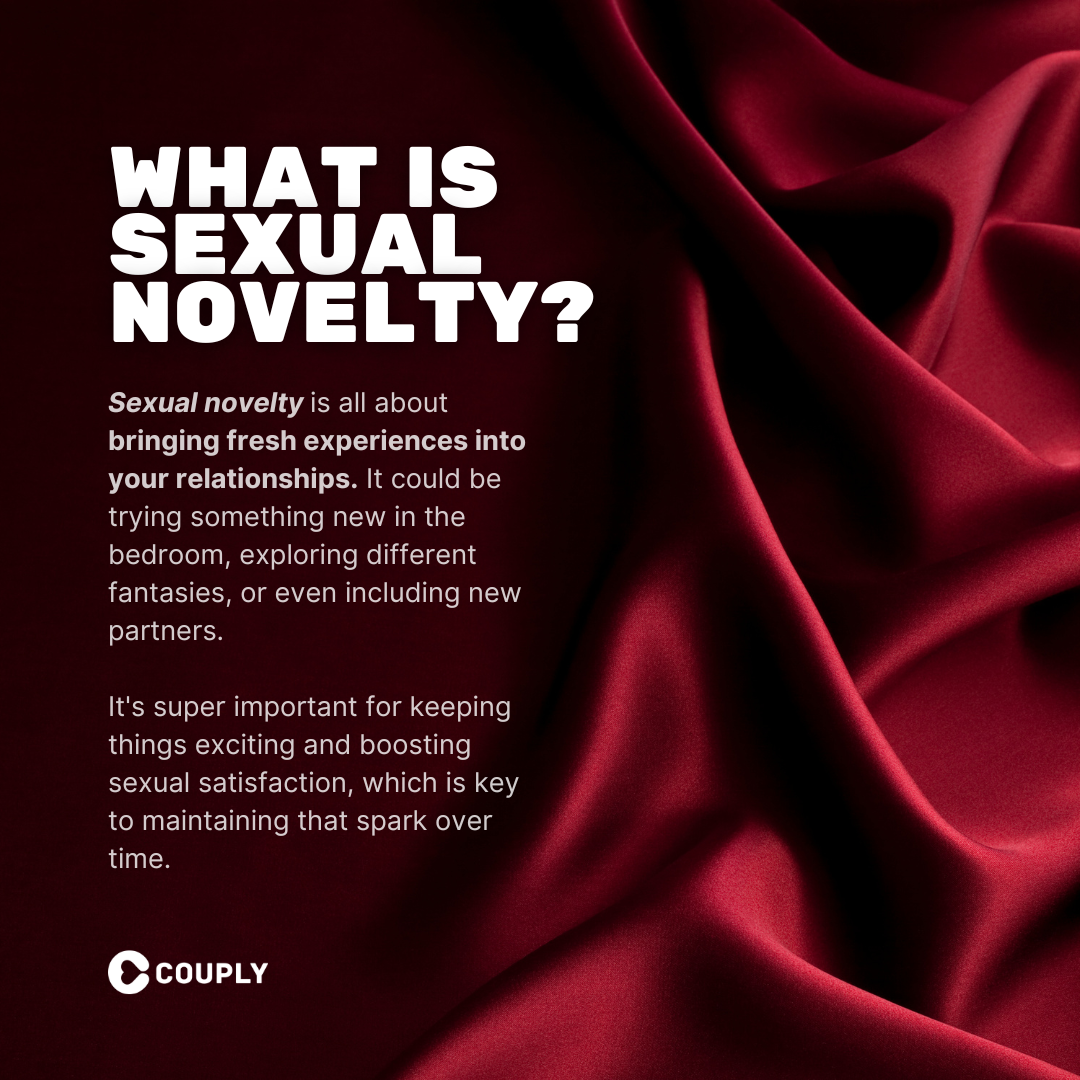
Sexual novelty refers to any fresh or different sexual experiences that can spice things up, like trying out different positions, getting a little creative with role-playing, using cool props, switching up the scene and finding new spots to get busy, or simply breaking patterns that feel stale.
As a therapist, I often see long-term couples struggle with sexual boredom due to stress, mismatched libidos, emotional distance, health concerns, or unresolved conflict. Now in relationships, it's super important for keeping the spark alive, especially in long-term relationships where monotony can set in, because who doesn't want to keep the excitement rolling? Research actually suggests that sexual novelty is an important factor influencing sexual satisfaction.
Sexual novelty can increase arousal and satisfaction, partly because of how our brains respond to new experiences and dopamine release. Studies show that passion can diminish in monogamous relationships because of something called the Coolidge effect.
On top of that, factors like culture, religion, past negative experiences, gender roles, trauma, and low self-esteem can create sexual inhibitions, leaving many folks without much in the way of tools to spice things up.
Our desire for something new is totally part of being human and is tied to both biological and psychological stuff, like that dopamine hit we get when we're having a good time. In fact, studies show that we've got this built-in urge to chase after new experiences, which just cranks up the arousal and satisfaction.
So, wanting to mix things up is just part of the fun of being human! Despite this, novelty might be helpful but it's important to know that it's not cure-all!
What Is the Coolidge Effect?

The Coolidge Effect is a phenomenon where sexual interest increases in response to a new partner. It has been observed in animals and humans and is often used to explain why novelty can heighten arousal.
The term comes from a story involving former U.S. President Calvin Coolidge and his wife during a visit to a government farm. After observing a rooster mating multiple times, Mrs. Coolidge was told that the rooster had a different partner each time. She famously replied, “Tell that to Mr. Coolidge,” which led to the term being coined.
Research suggests that this effect is tied to biology and evolution, helping explain why novelty can boost sexual desire.This natural inclination for variety in partners also might help explain why men tend to be more open to new sexual experiences and why so many people consume pornography.
But hey, so even though guys often look for different sexual experiences, it doesn't mean they should cheat or ditch their partners. It's more like a part of our biology that gives us some insight into who we are as humans. AGAIN, this does not justify AND used as an excuse for cheating or disrespecting a partner! I don't want to hear men saying, "I cheated because of biology" or "It's natural cause I'm a man."
Despite This, the Majority Still Said No
Even with curiosity around novelty and exploration, most of the Couply Community still answered:
“Absolutely not. It invites an unhealthy dynamic and potential for jealousy.”
This reflects how strongly many people value emotional safety, trust, and relational stability.
One community member shared a response that captures why so many people feel conflicted about this topic:
“I feel very conflicted about whether inviting a third person is a good thing or a bad thing. I believe it takes very strong-minded people to have the necessary conversations, set boundaries, and actually stick to them in a way that respects both yourself and your partner.It’s important to fully understand the impact this kind of decision can have on your day-to-day life, especially because emotional shifts don’t always come with warning signs. You really have to consider all the possible outcomes and how they could affect your future together.I strongly believe that you need a high level of confidence in yourself and in your relationship to protect the core parts of your partnership that make you who you are as a couple.Personally, I’m okay with the idea if everything is discussed beforehand and all boundaries are clearly set and respected. At the same time, I still have fears, like worrying that my partner could become more attracted to the other person. I’m grateful to have a partner who prioritizes our relationship and communicates openly about what feels safe for both of us. For anyone thinking about experimenting, it’s important to be fully aware of the risks and emotional consequences before moving forward. After my first experience, I understood why some people are more open to it, but I also realized it requires deep self-awareness, trust, and emotional maturity to make it a meaningful experience rather than a harmful one.”
This reflection mirrors why the majority of respondents chose “Absolutely not”. Even when curiosity exists, many people recognize how emotionally complex this dynamic can be and how easily it can affect trust, security, and the foundation of a relationship.
Should You Add a Third Person Into the Bedroom?
There’s no universal answer. Inviting a third into a relationship is not for everyone, and that is absolutely okay.
Inviting a third person into the bedroom comes with emotional, relational, and psychological complexities. AND, this is something you really need to think about as a couple.
What matters most isn’t how open-minded you are, but whether your relationship has:
- Trust
- Honest communication
- EMOTIONAL SECURITY!
- Clearly defined boundaries
The fact that most of the Couply Community answered “absolutely not” doesn’t mean threesomes are wrong. It means many couples prioritize stability and emotional safety over sexual experimentation, and that’s valid.
But how about you? How do you feel about inviting a third person into the bedroom?
If you want to continue the conversation, download the Couply App and share your thoughts with the community.
About the Author
.jpg)
Sheravi Mae Galang is a clinical psychologist and a content coordinator for the Couply app. Couply was created to help couples improve their relationships. Couply has over 300,000 words of relationship quizzes, questions, couples games, and date ideas and helps over 400,000 people.


