


Every winter, dating apps get busier, couples seem to appear out of nowhere, and suddenly everyone wants someone to bring to holiday parties. But not every winter romance is built to last—and some people know that from the very beginning.
That's where sledging comes in. Sledging is a dating trend where someone stays in a relationship through the colder months or holiday season, despite already knowing they don't see a future with the person. The goal isn't necessarily love or commitment. Often, it's companionship, convenience, or simply avoiding loneliness until winter is over.
The problem? The other person usually doesn't know they're part of a temporary arrangement. While one partner is imagining what comes next, the other may already have one foot out the door. That's what makes sledging feel so painful—and why it's becoming one of the most talked-about toxic dating trends in modern relationships.
What Is Sledging in Dating?
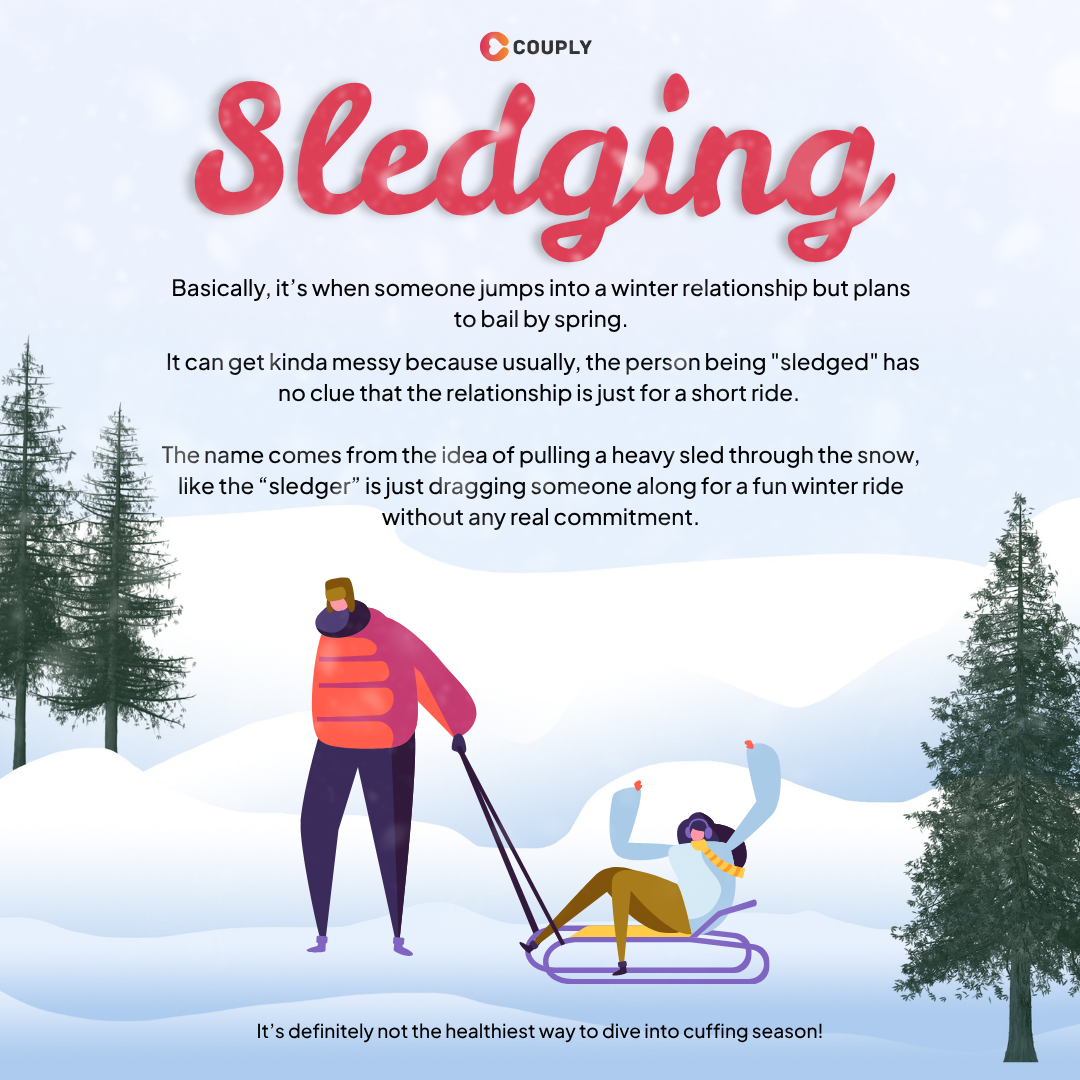
Sledging is a modern dating trend where someone stays in a relationship during the colder months—often for comfort, companionship, or convenience—but without a real intention of long-term commitment.
Unlike casual dating, sledging can feel more emotionally involved on the surface. There may be dates, holidays together, and increased closeness. But underneath it, the relationship has an unspoken expiration date.
It’s not always openly malicious. Sometimes it’s avoidance. Sometimes it’s fear of loneliness. And sometimes it’s simply emotional convenience. But the impact on the other person can feel confusing and deeply hurtful when expectations don’t match intentions.
The Meaning Behind the Trend
At its core, sledging is about emotional timing.
Winter and the holiday season naturally heighten the need for connection. People want warmth, companionship, and someone to share experiences with—especially during family gatherings, celebrations, and colder, quieter months.
Sledging happens when someone leans into that seasonal closeness without fully committing to what it means afterward.
So instead of building something intentional, the relationship becomes something that is used for a season rather than chosen for the long term.
How Sledging Differs From Cuffing Season
Sledging is often confused with cuffing season, but they’re not the same.
Cuffing season is when people intentionally seek short-term relationships during winter, usually with some level of honesty or mutual understanding that it may not last beyond the season.
Sledging, on the other hand, is more one-sided and less transparent. One person may be emotionally invested in a future, while the other is already treating the relationship as temporary—without clearly saying so.
The key difference is intention and honesty:
- Cuffing season = mutual short-term intention (ideally communicated)
- Sledging = hidden lack of long-term intent while maintaining emotional involvement
Why Do People Sledge?
Most people who engage in sledging are not necessarily trying to hurt someone. More often, they're trying to avoid discomfort—whether that's loneliness, guilt, uncertainty, or difficult conversations.
The problem is that while sledging may temporarily solve one person's discomfort, it often creates confusion and heartbreak for the other.
Fear of Being Alone During the Holidays
The holiday season can amplify feelings of loneliness.
Family gatherings, holiday parties, social media posts, and cultural messages about togetherness can make being single feel especially uncomfortable. For some people, having a partner during this time provides emotional comfort, companionship, and a sense of belonging.
Rather than facing the discomfort of being alone, they may stay in a relationship they already know isn't right for them.
The relationship becomes less about building a future and more about avoiding loneliness in the present.
Avoiding Difficult Breakup Conversations
Breaking up is uncomfortable.
It can involve guilt, sadness, conflict, disappointment, and difficult conversations that many people would rather avoid.
Sometimes a person knows the relationship is no longer working but postpones ending it because the timing feels inconvenient. They may not want to disrupt holiday plans, hurt their partner before a special occasion, or deal with the emotional fallout during an already stressful season.
What starts as "I'll wait until after the holidays" can unintentionally become months of giving someone hope for a future that isn't actually being considered.
In these situations, sledging often reflects avoidance rather than cruelty—but the impact can still be painful.
Seeking Comfort Without Commitment
Relationships provide many things beyond love.
Companionship.
Affection.
Emotional support.
Physical intimacy.
A sense of routine and familiarity.
Some people enjoy these benefits but aren't ready—or willing—to make a genuine long-term commitment.
As a result, they stay in the relationship because it feels good right now, even though they know they don't see a future.
The challenge is that comfort can sometimes create the appearance of commitment. A partner may interpret closeness, affection, and shared experiences as signs of a growing relationship when the other person is simply enjoying the temporary benefits.
Sledging is often driven by avoidance—avoiding loneliness, difficult conversations, or uncomfortable decisions. The issue isn't wanting comfort. It's accepting the comfort of a relationship without being honest about your intentions.
7 Signs You Might Be Getting Sledged
While no single sign proves someone is sledging you, patterns matter. The clearest indicator is often a mismatch between the level of closeness in the relationship and the level of commitment being offered.
1. They Avoid Talking About the Future
When conversations move toward long-term plans, they become vague, change the subject, or keep things intentionally unclear.
You may notice that they enjoy spending time together now but seem reluctant to discuss where the relationship is heading.
It's not that every relationship needs immediate certainty. The concern is when someone consistently avoids conversations about the future while continuing to deepen the relationship in the present.
2. Their Effort Increases Only Around the Holidays
Suddenly they're making plans, being more affectionate, inviting you to events, and wanting more quality time together.
While this can be genuine, it can also be worth noticing if the increased effort seems tied specifically to the holiday season rather than a broader pattern of commitment.
If their investment rises dramatically during winter but fades afterward, that inconsistency may reveal more than their words do.
3. You're Meeting Family but Getting No Clarity
Meeting family often feels like a significant relationship milestone.
That's why it can be confusing when someone includes you in holiday gatherings, introduces you to important people, and treats you like a serious partner—but still avoids defining the relationship or discussing the future.
The actions suggest commitment, but the conversations never quite match.
4. The Relationship Feels Convenient for Them
Do they seem most invested when they need companionship, emotional support, or someone to attend events with?
Healthy relationships involve mutual support, but sledging often has an element of convenience.
The relationship appears to fit neatly into their life without requiring deeper commitment, sacrifice, or long-term planning.
You may start feeling like you're filling a role rather than being genuinely chosen.
5. They Give Mixed Signals About Commitment
One day they talk about future possibilities.
The next day they seem emotionally distant.
They act like a committed partner in some situations but become noncommittal when the relationship is discussed directly.
These mixed signals can leave you feeling confused, constantly trying to interpret what they really want.
6. You're Emotionally Invested but They're Ambiguous
You know how you feel.
You know what you're building toward.
But when it comes to them, everything feels uncertain.
Instead of receiving clarity, you're left with vague answers, inconsistent behavior, or promises that never quite become concrete.
The relationship keeps moving forward emotionally while remaining unclear relationally.
7. Something Feels Temporarily Permanent
This is often the hardest sign to explain—and the easiest to feel.
On the surface, everything appears serious. You're spending meaningful time together. The relationship feels established.
Yet there's an underlying sense that something is missing.
A lack of certainty.
A lack of forward movement.
A feeling that the relationship is being enjoyed rather than intentionally built.
Sometimes your intuition notices the mismatch before your mind fully understands it.
Key Insight: Sledging often creates a confusing dynamic where the relationship looks serious enough to deepen attachment but remains too ambiguous to provide genuine security.
Why Sledging Hurts More Than a Typical Breakup
Sledging can feel more painful than a straightforward breakup because it doesn’t just end a relationship—it often dismantles the future you thought you were building. The emotional impact is tied not only to the person, but to the meaning and expectations that quietly formed along the way.
The False Future Effect
One of the most painful parts of sledging is the illusion of continuity.
When a relationship includes holidays together, family introductions, daily intimacy, and shared routines, the brain naturally starts building a future narrative. You begin imagining what comes next—next holiday, next milestone, next year together.
But if one person never truly intended long-term commitment, that imagined future was never mutual.
So when the relationship ends, it doesn’t just feel like losing the present connection. It feels like losing a future that you had already started emotionally living in.
That gap between perceived reality and actual intention is what makes it especially destabilizing.
Losing More Than Just the Relationship
In typical breakups, there is usually a clearer understanding that things were ending or unstable.
With sledging, the loss often feels layered.
You may not only grieve the person, but also:
- The emotional security you thought you had
- The identity of being “in a relationship” during a meaningful season
- The social and family integration that came with it
- The emotional investment you made under the assumption of continuity
It can feel like multiple losses happening at once, not just one.
This is why sledging can leave people questioning not only the relationship, but their judgment, perception, and emotional safety moving forward.
Why Post-Holiday Breakups Feel So Intense
Timing plays a big psychological role in emotional pain.
Breakups that happen after the holidays often feel especially heavy because they come right after a period of heightened emotional bonding. Holidays tend to amplify closeness, routine disruption, shared experiences, and expectations of togetherness.
So when the relationship ends soon after that peak, the contrast feels abrupt.
There’s also the emotional whiplash of going from:
“we’re spending holidays together”
to
“we’re no longer together”
That shift can intensify grief, confusion, and emotional shock.
On top of that, the end of the holiday season itself can already bring a sense of emotional drop or emptiness for many people, which compounds the breakup experience.
Key Insight: Sledging hurts deeply not just because of who you lose, but because of the future you were led—directly or indirectly—to believe in.
The Psychology Behind Sledging
Sledging isn’t just a dating trend—it’s a behavior rooted in emotional patterns that show up when people are trying to manage discomfort rather than build clarity. At its core, it often reflects internal conflict between what someone feels, what they want, and what they’re willing to face.
Emotional Avoidance
For many people, sledging is driven by emotional avoidance.
Instead of confronting uncomfortable truths—like “this relationship isn’t right for me” or “I need to end things”—they postpone the decision. Not because they’re unaware, but because they’re avoiding the emotional weight that comes with it.
That avoidance can look like staying “just a little longer,” especially through emotionally loaded periods like the holidays. The relationship becomes a buffer against discomfort rather than a consciously chosen connection.
The issue is that avoidance doesn’t resolve the problem—it delays it, often while increasing emotional complexity for both people involved.
Loneliness and Seasonal Vulnerability
The holiday season tends to amplify emotional needs.
People feel stronger pressure to be in relationships, attend gatherings with a partner, and avoid being alone during socially symbolic moments. This creates a kind of seasonal vulnerability where decisions are more influenced by emotional environment than long-term intention.
In that state, even a relationship that isn’t fully right can feel “good enough for now,” especially if it reduces loneliness.
Sledging often thrives in this overlap between emotional need and seasonal intensity.
Why Comfort Can Override Honesty
Comfort is powerful.
Relationships provide emotional regulation—familiarity, affection, routine, and a sense of belonging. Even when someone knows a relationship isn’t aligned long-term, the immediate comfort it provides can make honesty feel harder to act on.
This is where conflict emerges internally:
- Staying feels easier right now
- Leaving feels honest but emotionally difficult
So instead of making a clear decision, some people stay in the relationship while postponing clarity.
The problem is that comfort without honesty creates mixed signals. One person experiences connection and assumes continuity, while the other may already be emotionally disengaging.
Key Insight: Sledging often happens when emotional avoidance, seasonal loneliness, and the pull of comfort temporarily outweigh the courage to be fully honest.
What To Do If You Think You're Being Sledged
If something feels off in your relationship—like things are warm and intimate but also unclear—it’s important to slow down and look at patterns instead of getting caught in uncertainty. The goal here isn’t to assume the worst, but to gain clarity so you can protect your emotional wellbeing.
Ask Direct Questions
One of the most effective (and hardest) steps is simply asking direct, honest questions.
Instead of trying to interpret mixed signals, gently bring clarity into the conversation. You might ask things like:
- “How do you see this relationship going after the holidays?”
- “What are you looking for with us long-term?”
- “Are we on the same page about what this is?”
Direct questions may feel uncomfortable, but they remove the guessing game. If someone is genuinely invested, they will be willing to have the conversation—even if the answer isn’t perfectly certain.
Clarify Expectations
Sometimes the issue isn’t intentional deception, but unspoken assumptions.
One person may be assuming seriousness, while the other sees the relationship as temporary or uncertain. Without clarification, both people can walk away with completely different understandings of the same relationship.
This is why it’s important to name expectations clearly:
- What does each of you want right now?
- Are you both open to something long-term?
- What does commitment actually mean to each of you?
Clarity doesn’t guarantee alignment, but it prevents emotional confusion from deepening.
Pay Attention to Actions Over Seasonal Gestures
It’s easy to get swept up in holiday closeness—more time together, more affection, more emotional intensity.
But what matters more is consistency outside of seasonal moments.
Pay attention to whether their behavior:
- Stays consistent after the holidays
- Matches their words about commitment
- Shows effort beyond convenience or timing
Temporary increases in affection during emotional seasons can feel meaningful, but patterns over time reveal intent more accurately than short bursts of closeness.
Key Insight: Clarity doesn’t come from reading between the lines—it comes from listening to what is said, observing what is done, and being willing to ask the questions directly.
How To Protect Yourself From Seasonal Dating Trends
Seasonal dating trends like sledging can feel exciting in the moment because they often come with increased closeness, attention, and emotional intensity. But the risk is that temporary connection gets mistaken for long-term commitment.
Protecting yourself isn’t about becoming guarded—it’s about staying grounded in clarity while emotions are heightened.
Watch for Ambiguity
Ambiguity is one of the biggest warning signs in seasonal relationships.
If someone consistently avoids defining what the relationship is, where it’s going, or how they see you long-term, that uncertainty is important to notice—not ignore.
Ambiguity can feel comfortable at first because it allows the relationship to stay light and pressure-free. But over time, it can create emotional confusion where one person is investing deeply while the other stays non-committal.
Clarity doesn’t require pressure—but it does require willingness to be honest.
Don't Confuse Holiday Intimacy With Commitment
The holidays naturally create closeness.
People spend more time together, share meaningful experiences, attend events, and engage in emotional moments that can feel significant. This can easily create the impression of depth and direction.
But intensity is not the same as commitment.
Just because someone is affectionate, present, or emotionally available during a specific season doesn’t automatically mean they are building toward something long-term.
It’s important to separate how it feels in the moment from what is being consistently built over time.
Trust Consistency Over Temporary Closeness
One of the most reliable indicators of genuine connection is consistency.
Temporary closeness can happen in bursts—especially during emotionally charged periods like holidays, travel, or milestones. But consistency shows up in everyday behavior.
Ask yourself:
- Do they show up for me outside of special occasions?
- Is their effort steady or seasonal?
- Do their actions match their words over time?
Consistency is what turns connection into stability. Without it, closeness can feel real but still be temporary.
Key Insight: Protecting yourself from seasonal dating patterns isn’t about doubting every connection—it’s about trusting patterns over moments, and clarity over intensity.
Healthy Relationships Don’t Have Expiration Dates
In a world of seasonal dating trends and temporary connections, it’s easy to normalize relationships that feel time-bound. But healthy love isn’t built on convenience, timing, or emotional seasons—it’s built on clarity, consistency, and mutual intention.
A relationship may change and evolve over time, but when it’s genuinely grounded in commitment, it doesn’t quietly come with an unspoken end date.
What Genuine Commitment Looks Like
Genuine commitment is not about perfection or constant intensity. It’s about emotional clarity and consistent effort over time.
You can usually recognize it through patterns like:
- Clear communication about where the relationship is heading
- Effort that continues beyond special occasions or emotional seasons
- Willingness to have uncomfortable but honest conversations
- Actions that match words consistently, not selectively
- Emotional presence that doesn’t disappear when life gets less “romantic”
Committed relationships don’t rely on heightened moments to feel real. Instead, they are sustained through everyday choices to show up, connect, and invest—even when it’s ordinary.
Holiday romance can feel intense, meaningful, and even life-changing. Shared celebrations, increased time together, and emotional closeness can create a strong sense of connection in a short period of time.
But intensity is not the same as intention.
Without honesty about what someone truly wants, even the most beautiful seasonal connection can become confusing over time. One person may be imagining a future, while the other is simply enjoying a moment in time.
That’s why honest intentions matter more than how a relationship feels during peak emotional moments.
Clarity protects both people—it prevents false expectations, emotional imbalance, and avoidable heartbreak.
Key Insight: Healthy relationships aren’t defined by seasons or situations. They’re defined by mutual intention, consistent effort, and the absence of an unspoken expiration date.

.png)


