
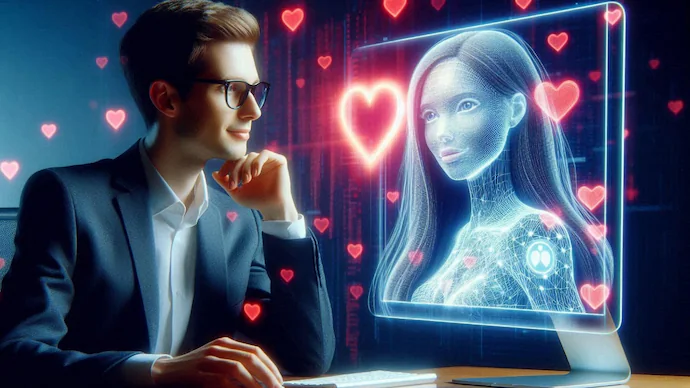


Something fascinating happened last month that made me rethink everything I thought I knew about influence, authenticity, and human connection. A friend showed me an Instagram account with 2.7 million followers—perfectly curated photos, engaging captions, brand partnerships with major companies. The influencer? Completely artificial. Not a real person at all.
AI influencers have exploded onto the social media scene, and they're not just a novelty anymore. These computer-generated personalities are landing major sponsorships, building devoted followings, and fundamentally changing how we think about digital presence. But here's the thing that really grabbed my attention: studying these virtual personalities has revealed some surprisingly profound truths about what makes real human relationships work—and what makes them fall apart.
The Allure of Perfection (And Why It's a Trap)
AI influencers like Lil Miquela, Shudu, and Imma have one thing in common: they're flawless. Perfect skin, perfect style, perfectly consistent personalities. They never have bad days, never post unflattering angles, never contradict themselves. And people are drawn to that polished perfection like moths to a flame.
Sound familiar? It should. Because many of us bring this same "curated perfection" mindset into our actual relationships—and it's slowly poisoning them.
Think about how many couples present themselves on social media versus how they interact behind closed doors. The contrast can be jarring. We've become so accustomed to filtering, editing, and presenting highlight reels that we've forgotten something crucial: real intimacy requires real imperfection.
The paradox of AI influencers is that while millions follow them, nobody can truly connect with them. They generate engagement, but not genuine relationship. And when we try to emulate that same polished, filtered approach in our romantic partnerships, we end up with the same hollow result—lots of surface-level interaction, but no real depth.
What Virtual Relationships Reveal About Real Ones
Here's where things get really interesting. As AI technology advances, some companies are developing AI companions and chatbots designed specifically for relationship simulation. People form attachments to these programs, confide in them, even develop what feels like emotional dependency.
Why? Because AI companions offer something seductive: they're always available, never judgmental, perfectly attuned to your preferences, and completely predictable. They remember everything you tell them. They never get tired or grumpy. They validate your feelings without challenging you.
And that's precisely the problem.
Real relationships aren't supposed to be frictionless. The discomfort, the misunderstandings, the moments when your partner sees things differently than you do—these aren't bugs in the system. They're features. They're how we grow, develop empathy, and become fuller versions of ourselves.
When you're dating a real person, they bring their own perspective, their own needs, their own bad days. They forget things you've told them. They sometimes prioritize their own needs over yours. And while that can be frustrating, it's also what makes connection meaningful. You're not interacting with a mirror or a service provider—you're engaging with another complete human being.
The companies creating these technologies understand human psychology frighteningly well. They're essentially reverse-engineering what makes people feel heard, valued, and connected. For those of us in real relationships, there's actually something valuable to learn here—not about replacing human connection, but about understanding its fundamental components.
The Four Elements AI Can't Replicate (But You Can)
1. Genuine Vulnerability
AI influencers and companions can simulate vulnerability, but they can't actually be vulnerable. They have nothing at stake. When your partner shares something that genuinely scares them or reveals an insecurity they're ashamed of, that's real vulnerability. That's trust in action.
The secret to building deeper intimacy isn't creating a perfect image—it's having the courage to show up imperfectly. Share the things you're worried about. Admit when you don't have it all figured out. Let your partner see you in your messy, uncertain moments. That's where real connection lives.
2. Authentic Curiosity
AI can ask questions, but it can't be genuinely curious about you. It processes information; it doesn't wonder about you with real fascination. When your partner asks about your day and actually listens—not to formulate their response, but to understand your experience—that's irreplaceable.
Want to strengthen your relationship? Practice genuine curiosity. Ask follow-up questions. Notice the small details your partner mentions in passing and bring them up later. Show them that their inner world matters to you not because you're programmed to care, but because you actually do.
3. Growth Through Conflict
AI companions are designed to agree with you, validate you, and keep things pleasant. Real partners sometimes disagree, challenge your perspectives, and create friction. And counterintuitively, that friction is essential for both individual growth and relationship depth.
The couples with the strongest bonds aren't the ones who never fight—they're the ones who've learned to navigate disagreement productively. They've discovered that you can hold different opinions, work through tension, and emerge closer than before. That's something no algorithm can replicate because it requires two people willing to be uncomfortable in service of something bigger.
4. Shared Unpredictability
Life throws curveballs. Jobs change, health challenges emerge, unexpected opportunities arise. AI operates within defined parameters, but real relationships exist in the gloriously chaotic realm of genuine human experience.
Some of the most meaningful relationship moments happen in the unscripted, unpredictable spaces: the spontaneous road trip, the crisis that brings you closer, the random Tuesday that somehow becomes a cherished memory. You can't program that. You can only create the conditions for it by staying present and available to whatever unfolds.
Lessons from the Virtual World for Real Connection
The technology sector is investing billions in understanding what makes people feel connected, seen, and valued. Tools and platforms like http://fanscraftor.com/ are exploring how AI can enhance creative engagement and community building. But here's the beautiful irony: all that research ultimately points back to fundamentally human needs that technology can analyze but never truly fulfill.
So what can we learn from the AI influencer phenomenon about building better real-world relationships?
Be consistently present, not perfectly curated. AI influencers maintain perfect consistency in their image. Real relationships thrive on genuine presence—showing up as your actual self, even when that self is tired, uncertain, or struggling. Your partner doesn't need your highlight reel; they need your honest reality.
Value depth over engagement metrics. AI influencers optimize for likes, follows, and comments. Healthy relationships optimize for understanding, trust, and mutual growth. It's entirely possible to have a relationship that looks amazing on social media but feels empty in private. Focus on what happens when nobody's watching.
Embrace the messy, imperfect, inconvenient parts. The things that make AI influencers appealing—their predictability, their lack of demands, their tireless positivity—are exactly what would make them terrible partners. Real love includes negotiating different needs, working through hard conversations, and choosing each other even when it's not convenient.
Remember that attention isn't the same as attunement. AI can give you unlimited attention, responding to every message instantly, always available. But attunement—truly understanding someone's emotional state, anticipating their needs, responding to the unspoken—that requires a real human who knows you deeply and cares genuinely.
The Human Advantage
As AI influencers become more sophisticated and AI companions become more convincing, we're going to face new questions about connection, authenticity, and what it means to truly know someone. But we're also being handed a gift: a mirror that shows us, with unusual clarity, what makes human connection irreplaceable.
You can't fake shared history. You can't program the way your partner's laugh changes when they're truly delighted versus just being polite. You can't simulate the specific comfort of being known by someone who's seen you at your worst and chosen to stay anyway.
The rise of AI influencers isn't a threat to real relationships—it's a reminder of their value. Every perfectly filtered image, every algorithmically optimized caption, every flawlessly consistent virtual personality throws into sharp relief what makes real human connection so precious: its imperfection, its unpredictability, its delicious messiness.
So here's my challenge: take one thing AI does really well—consistency, availability, personalization, validation—and bring a human version of it into your relationship. Not the hollow, programmed version, but the real deal. Be consistently honest. Make yourself genuinely available. Pay attention to what matters to your partner. Validate their feelings without requiring them to be convenient.
The technology will keep advancing. The virtual influencers will become more convincing. The AI companions will get better at mimicking connection. But they'll always be mimicking. You have the capacity for the real thing—messy, challenging, inconvenient, and absolutely irreplaceable. That's not just your advantage over AI. That's your invitation to something infinitely more meaningful.


