Moving on can look different for everyone. Some people take time to heal, reflect, and process the end of a relationship. Others move forward quickly, sometimes before they’ve emotionally let go of what came before.
This is where monkey-barring comes in.
It describes a dating pattern where someone holds onto one relationship while reaching for the next, creating a bridge between connections instead of fully closing one chapter before starting another.
It may look like confidence or “moving on easily” from the outside, but underneath it can sometimes reveal fear, avoidance, or difficulty sitting with emotional uncertainty.
What Is Monkey-barring?
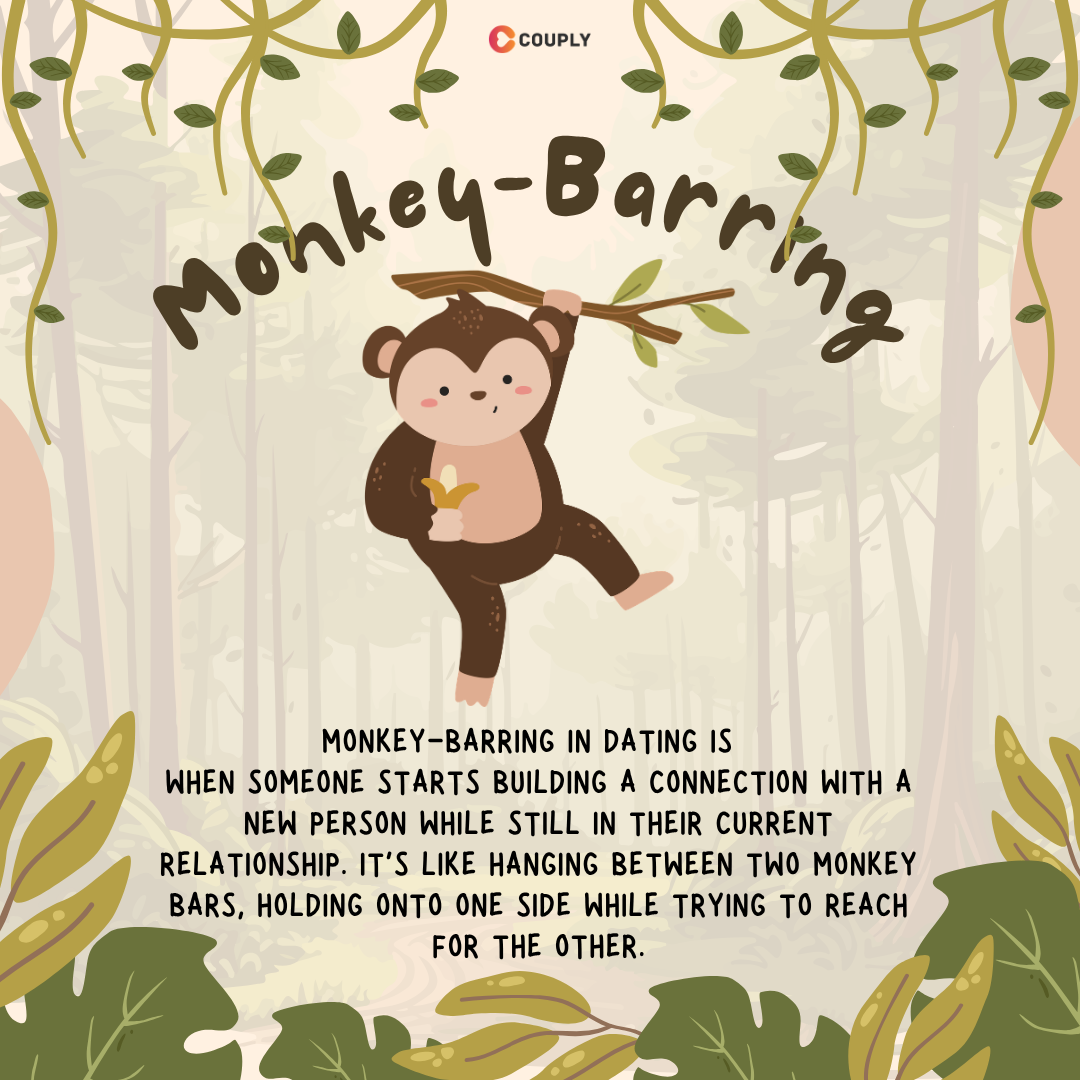
Monkey-barring is a dating term used to describe when someone moves from one relationship to another without spending much time being single or emotionally detached.
The idea comes from the image of swinging from one bar to the next without letting go of the first one.
In relationships, this can look like someone searching for a new emotional connection before fully ending their current one. They may already be flirting, seeking attention, or building intimacy with someone else while still technically in a relationship.
It doesn’t always mean someone is intentionally trying to hurt another person. Sometimes it comes from discomfort with loneliness, fear of starting over, or not knowing how to process the end of a relationship.
But regardless of the reason, the overlap can create confusion and emotional harm.
How Monkey-barring Shows Up in Real Relationships
Monkey-barring can appear in subtle ways.
It might look like this:
- Someone emotionally checking out of a relationship before ending it
- Becoming unusually interested in someone new during relationship problems
- Keeping a “backup connection” while deciding whether to leave
- Seeking validation from new romantic attention
- Ending one relationship and immediately entering another without processing the breakup
Sometimes the person may not even recognize the pattern. They might genuinely believe they are simply “moving on” when they are actually avoiding the uncomfortable space between relationships.
Healthy transitions involve closure. Monkey-barring skips that space.
Why It Often Goes Unnoticed Until Later
Monkey-barring can be difficult to spot because it doesn’t always look like a problem at first.
The person may seem happy, excited, and ready for a fresh start. Friends might even see it as a sign that they are “doing well” after a breakup.
The deeper issues often appear later.
Without time to process the previous relationship, unresolved emotions can follow into the next one:
- Old hurt gets carried forward
- Comparisons between partners continue
- Emotional availability becomes inconsistent
- The new relationship carries pressure to replace what was lost
Sometimes the biggest clue is not how quickly someone finds someone new, but whether they ever truly had time to understand what happened before.
Moving on quickly isn’t always a sign of healing. Sometimes it’s a sign that someone never had the space to let go.**
Why Monkey-barring Happens
Monkey-barring often isn’t just about wanting a new partner. Underneath the behavior, there is usually a deeper emotional need being managed.
For some people, the space between relationships feels uncomfortable, uncertain, or even threatening. Instead of sitting with those feelings, they look for a new connection to soften the transition.
Understanding the reasons behind it doesn’t excuse the behavior. It helps explain the emotional patterns that keep it going.
Fear of Being Alone
For some people, being single can bring up difficult emotions.
They may experience:
- Loneliness
- Anxiety about being unwanted
- Fear that they won’t find someone else
- A loss of identity outside the relationship
A new romantic connection can temporarily create a sense of safety. It reassures them that they are still desired and that they won’t have to face the uncertainty of starting over.
The problem is that a new relationship can become a way to escape uncomfortable feelings instead of actually processing them.
Being alone isn’t the same as being abandoned. But when someone has a deep fear of being alone, the difference can feel hard to recognize.
Attachment Anxiety and Emotional Dependency
Attachment patterns can influence how people handle endings.
Someone with anxious attachment tendencies may struggle with the emotional distance that comes after a breakup. They may seek closeness quickly because separation feels overwhelming.
This can show up as:
- Needing constant reassurance
- Feeling unsettled without romantic attention
- Looking for someone new before fully letting go
- Equating a partner’s presence with emotional security
The relationship may become less about choosing someone and more about needing someone to regulate difficult emotions.
Healthy relationships involve connection, but they also require the ability to feel secure within yourself.
Avoidance of Breakup Grief
Breakups involve loss.
Even when a relationship is unhealthy or no longer working, there is still something to grieve:
- Shared memories
- Future plans
- Familiar routines
- The version of yourself that existed in that relationship
Monkey-barring can become a way to skip that grief.
Instead of facing:
“I’m hurting because this relationship ended,”
Someone may focus on:
“I feel better because someone new wants me.”
But unresolved emotions don’t always disappear. They often follow people into the next relationship.
Need for Constant Emotional Reassurance
For some people, attention from a new person provides a quick emotional boost.
Feeling wanted can temporarily quiet insecurities like:
- “Am I lovable?”
- “Was I easy to leave?”
- “Will anyone choose me?”
The issue is that reassurance from another person can become a temporary fix instead of building internal security.
Over time, the cycle can repeat:
relationship problems → fear → search for someone new → temporary relief → unresolved patterns continue.
Monkey-barring is often less about finding the right person and more about avoiding the discomfort of not having someone. Real emotional security grows when you can choose connection without needing it to escape yourself.
The Psychology Behind Monkey-barring
Monkey-barring is not only a dating behavior. It often reflects how someone manages emotions, uncertainty, and the loss of connection.
Relationships naturally bring comfort, validation, and a sense of belonging. When one relationship starts ending, some people instinctively reach for another source of closeness before they’ve had time to process what they’re losing.
The pattern is often less about the new person and more about what the new connection temporarily provides.
Emotional Regulation Through Relationships
Some people rely on romantic connection to help manage difficult emotions.
A partner can become a source of:
- Comfort during stress
- Reassurance during insecurity
- Distraction from painful feelings
- A sense of being valued and wanted
There is nothing wrong with wanting closeness. Healthy relationships are supposed to provide support.
The issue starts when a relationship becomes the main way someone handles emotions. Instead of feeling sadness, uncertainty, or loneliness and working through it, they immediately look for someone new to make those feelings quieter.
The new connection may feel like relief, but it doesn’t necessarily resolve the emotions underneath.
Dopamine Shifts During Relationship Transitions
New romantic connections often come with excitement and intensity.
Early dating can bring:
- Anticipation
- Curiosity
- Attention
- A feeling of being chosen
- Novel experiences
These feelings can create a strong emotional boost, especially after a difficult relationship period.
For someone leaving a painful or uncertain relationship, a new connection can feel like a reset button.
But the excitement of something new isn’t the same as long-term emotional stability. The early spark can sometimes distract from feelings that still need attention, like grief, hurt, or unresolved conflict.
Why Some People Struggle With Emotional “Empty Space”
After a breakup, there is often a gap.
The routines change. The messages stop. The person who used to be part of daily life is suddenly gone.
That empty space can feel uncomfortable because it forces someone to sit with:
- Their own thoughts
- Their emotions
- Their sense of identity outside the relationship
- Questions about what went wrong
For some people, a new relationship fills that space quickly.
But avoiding the empty space can mean missing the opportunity to understand yourself, heal, and recognize patterns you don’t want to repeat.
Learning to tolerate that in-between period can be difficult, but it’s often where growth happens.
A new relationship can bring comfort, but emotional healing requires more than replacing one connection with another. Sometimes the space between relationships is where people learn how to choose differently.
Signs You Might Be Monkey-barring
Monkey-barring can be hard to notice because it often doesn’t feel like you’re doing anything wrong. You might simply feel like you’re moving forward, looking for happiness, or trying to avoid getting stuck.
The key difference is whether you’re choosing a new relationship from a place of readiness or using a new connection to avoid the discomfort of ending the old one.
You Stay Emotionally Attached While “Moving On”
You may tell yourself you’re over a relationship, but part of you is still emotionally tied to it.
This can look like:
- Still hoping your ex will change their mind
- Comparing a new person to your previous partner
- Checking what your ex is doing
- Feeling affected by your ex’s actions while dating someone new
Moving on isn’t only about no longer being together. It also involves emotionally releasing the relationship.
If your heart is still in the previous chapter, the next person may be stepping into a story that hasn’t fully ended.
You Don’t Fully End Relationships Before Exploring New Ones
One sign of monkey-barring is creating a connection with someone new before you’ve clearly closed the current relationship.
This might include:
- Flirting while still deciding whether to leave
- Building emotional intimacy with someone else during relationship struggles
- Keeping another person as a possible “next option”
Sometimes this happens because ending a relationship feels too painful or uncertain.
But avoiding the ending often creates more confusion for everyone involved.
You Feel Uncomfortable Being Single
Being single can bring up uncomfortable feelings, especially after a serious relationship.
You might notice thoughts like:
- “I need someone to talk to.”
- “I don’t know who I am without a partner.”
- “I just don’t want to be alone.”
Wanting companionship is normal. But if being alone feels unbearable, it may lead you to seek a new relationship before you’re emotionally ready.
A healthy relationship is a choice, not an escape route.
You Rely on New Attention to Exit Old Relationships
Sometimes the excitement of a new person becomes the thing that gives someone the courage to leave.
The attention feels reassuring:
- Someone wants me
- Someone finds me attractive
- Someone chooses me
But when a new person becomes the reason you can finally walk away, it may mean you’re using the new connection to carry emotions you haven’t processed yet.
The question isn’t “Did I find someone new?” It’s “Am I genuinely ready for something new, or am I trying to avoid being without someone?”
Signs Your Partner Might Be Monkey-barring You
It can be painful to realize that someone may have emotionally started leaving before they officially ended the relationship.
Monkey-barring isn’t always obvious. Sometimes it happens through small shifts that only become clear when you look back at the pattern.
One sign alone doesn’t confirm anything. Relationships naturally go through changes. But repeated patterns of emotional withdrawal, confusion, or overlap are worth paying attention to.
Emotional Distance Before the Breakup
One common sign is feeling like your partner has already checked out emotionally before the relationship officially ends.
You might notice:
- Less interest in spending time together
- Fewer meaningful conversations
- Less affection or emotional effort
- Feeling like you’re the only one trying to reconnect
Sometimes people start grieving a relationship before they actually leave it. The problem is when one person is emotionally moving on while the other person is still trying to repair things.
Sudden Emotional Shift Toward Someone New
A noticeable change can happen when a new person enters the picture.
Your partner may suddenly:
- Seem more excited about someone else
- Become emotionally invested outside the relationship
- Compare you to another person
- Put energy into a new connection while pulling away from you
It can feel confusing because the relationship may have seemed normal before.
The issue isn’t that someone meets new people or has friendships. It’s when emotional energy that belonged in the relationship is redirected elsewhere before there has been honest communication.
Lack of Clarity or Closure
Healthy endings involve honesty.
Monkey-barring can create situations where someone is halfway out but avoids fully acknowledging it.
You might hear things like:
- “I don’t know what I want.”
- “I just need space.”
- “I’m confused.”
Sometimes uncertainty is genuine. But if there is also emotional investment in someone else, the lack of clarity can keep you stuck while they transition.
You deserve a relationship where you know where you stand.
Secretive or Overlapping Emotional Connections
One of the clearest concerns is when there are hidden connections happening alongside the relationship.
This can look like:
- Secret messaging
- Hiding interactions with someone they’re interested in
- Turning to another person for emotional intimacy instead of you
- Acting like they’re single before the relationship has ended
The problem isn’t just the other person. It’s the lack of honesty and the emotional overlap.
A relationship can end before someone officially leaves. Pay attention not only to whether your partner stays, but whether they are still emotionally present.
Why Monkey-barring Hurts All Involved
Monkey-barring doesn’t just affect the person being left behind. It also impacts the person doing it and the new connection that comes after.
Even when it feels like an easier way to move on, it often creates emotional confusion that follows everyone into the next chapter.
Emotional Confusion and Mistrust
When relationships overlap emotionally, clarity disappears.
The person being left often feels:
- Confused about when things started changing
- Unsure if the relationship was ever fully real in the end
- Doubtful about what was honest and what wasn’t
- Emotionally unsafe in future relationships
Trust gets shaken not only in the relationship, but sometimes in themselves too. They start questioning what they missed or misread.
For the person monkey-barring, there can also be inner conflict. They may feel guilt, avoidance, or emotional numbness, especially when they haven’t fully processed the breakup.
Delayed Closure and Unresolved Grief
Breakups need space to be processed.
Monkey-barring often skips that space, which means grief doesn’t disappear. It gets postponed.
Instead of:
“I’ve ended something and I’m healing,”
the emotional experience becomes:
“I left, but I never really dealt with it.”
This can show up later as:
- Lingering attachment to the past relationship
- Emotional carryover into the new one
- Difficulty fully being present with a new partner
- Confusion about what was actually felt vs avoided
Without closure, people often bring unfinished emotions into the next connection.
Feeling Replaced Before the Relationship Ends
One of the most painful experiences is realizing someone emotionally left before they physically did.
It can feel like:
- A slow withdrawal you couldn’t name at the time
- Being compared to someone you didn’t know existed in the picture yet
- Realizing you were being phased out instead of included in an honest ending
Even if the breakup eventually happens, the emotional impact often starts earlier. That creates a sense of being replaced before anything was officially over.
That feeling can stick. It affects how someone trusts future relationships and how safe they feel opening up again.
Monkey-barring doesn’t create clean transitions. It creates emotional overlap, and overlap almost always leads to unfinished feelings on all sides.
Monkey-barring vs Healthy Transition After Breakups
Not all post-breakup behavior is the same. Some people move forward in a grounded way. Others move forward while still emotionally holding onto what they just left.
The difference usually comes down to space. Whether there’s room to process, reflect, and actually close one chapter before opening another.
Healthy endings involve emotional closure
Healthy transitions don’t rush the emotional process.
They usually include:
- A clear decision to end the relationship
- Honest conversations about what didn’t work
- Time to process grief and emotional loss
- Acceptance that the relationship is truly over
Even when breakups are painful, there is clarity. Both people understand where things stand, even if they don’t fully agree on how it ended.
Closure doesn’t mean everything feels okay. It means the story has an ending.
Space between relationships allows healing
Being single for a while is not a gap to fix. It’s often part of healing.
That space allows a person to:
- Sit with emotions instead of avoiding them
- Rebuild identity outside of a relationship
- Reflect on patterns and lessons
- Regulate emotions without relying on someone new
When there’s space, the next relationship is usually a choice, not a reaction.
Monkey-barring skips this part. It replaces reflection with distraction, which can make emotional patterns repeat in the next connection.
Clarity vs overlap
Healthy transitions are clear. Monkey-barring is overlapping.
Healthy looks like:
- One relationship ends before another begins
- Emotional availability is reset
- New connections are formed with intention
Monkey-barring looks like:
- Emotional attachment to someone new while still in a relationship
- Breakups happening only after a replacement connection is formed
- Confusion about when one relationship actually ended
Clarity gives people emotional stability. Overlap creates emotional blur, where no one fully knows where they stand.
Healthy transitions respect emotional endings. Monkey-barring avoids them.
How to Stop Monkey-barring Patterns
Monkey-barring usually isn’t about bad intentions. It’s about discomfort. The discomfort of being alone, of endings, of emotional emptiness that follows breakups.
Stopping the pattern starts with learning how to stay with that discomfort instead of rushing to replace it.
Learn to tolerate being single
Being single can feel unfamiliar, especially if relationships have been a main source of emotional stability.
At first, it may bring up:
- Restlessness
- Loneliness
- Anxiety about the future
- A sense of identity loss
But over time, being single can also become something steadier. A space where you are not performing, adapting, or emotionally managing someone else.
The goal isn’t to like being single immediately. It’s to stop treating it like something you need to escape from.
Sit with emotional discomfort instead of escaping it
After a breakup, discomfort is normal. What matters is what you do with it.
Monkey-barring often happens when discomfort is quickly numbed through new attention or new connection.
Instead of that, try slowing down:
- Notice the urge to seek someone new
- Acknowledge the loneliness or sadness
- Let emotions exist without immediately fixing them
Discomfort doesn’t mean something is wrong. It often means something is being processed.
When you stop escaping every uncomfortable feeling, you start building emotional resilience.
Build identity outside relationships
When identity is strongly tied to being in a relationship, endings can feel destabilizing.
You may feel like:
- “I don’t know who I am alone”
- “I feel incomplete without someone”
- “I need a relationship to feel okay”
Building identity outside relationships helps shift that.
This can look like:
- Reconnecting with personal goals
- Spending time on friendships and interests
- Developing routines that are yours alone
- Making decisions that aren’t centered on a partner
The more rooted you are in yourself, the less likely you are to seek someone just to feel whole again.
Practice intentional closure
Closure doesn’t always happen naturally. Sometimes it has to be created.
Intentional closure can include:
- Having honest ending conversations
- Reflecting on what the relationship taught you
- Acknowledging what didn’t work without rushing into something new
- Giving yourself time before dating again
Closure is what separates moving forward from carrying emotional unfinished business into the next relationship.
When closure is intentional, the next connection starts from clarity, not avoidance.
Monkey-barring often comes from trying to avoid the discomfort of endings. But avoidance doesn’t create healing. It just delays it.
Recap: Monkey-barring is a pattern where people move into new relationships before fully letting go of the old one, often driven by fear of being alone or emotional discomfort.
Reframe: Ending well is part of loving well. How you close a relationship shapes what you carry into the next one.
Emotional space is not emptiness to rush through. It’s what allows you to begin again more honestly and more fully.



.png)