Every relationship hits bumps in the road. Conflicts, misunderstandings, and stress don’t mean your love is failing, really; they just mean you’re human. In fact, challenges can be some of the biggest growth opportunities for couples.
How challenges show up depends on things like attachment style, life stage, and emotional skills. A newly dating couple might struggle with trust, while long-term partners may wrestle with intimacy or routine. This blog isn’t about offering insights, strategies, and reassurance that healthy couples navigate difficulties too.
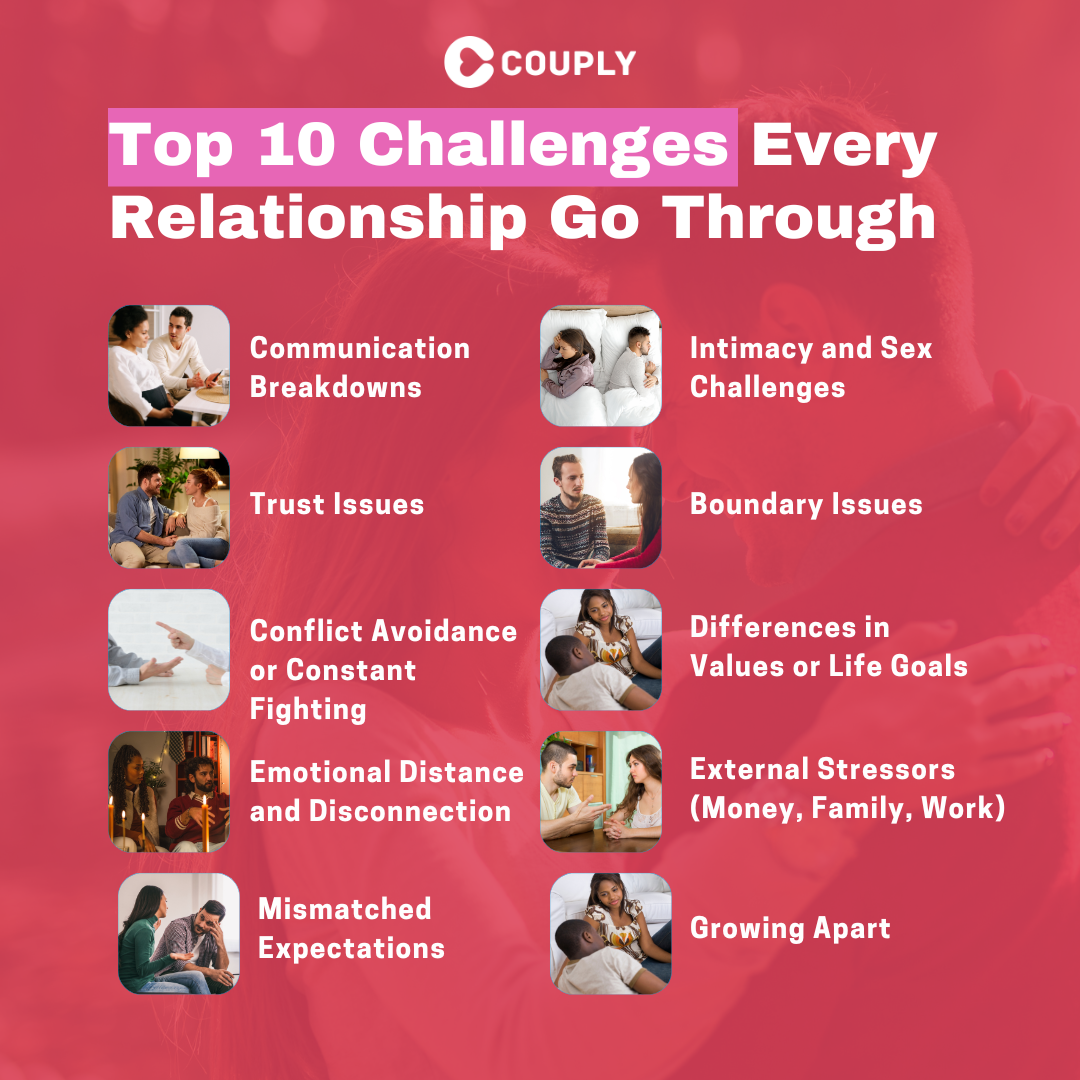
1. Communication Breakdowns
“We talk, but we don’t feel heard.”
Communication is one of the most common challenges couples face and often one of the most misunderstood. Many partners aren’t actually avoiding conversation. In fact, they may talk about the same issue repeatedly, yet still leave the discussion feeling unheard, frustrated, or misunderstood.
When communication breaks down, it rarely means couples aren’t talking. More often, it means they’re talking in ways that don’t create understanding.
Common Communication Problems in Relationships
Communication struggles can show up in subtle ways, such as:
- Talking in circles where the same argument repeats without resolution
- Defensiveness, shutting down, or escalation when discussions become emotionally charged
- Misunderstandings over small things, like tone, wording, or assumptions about intent
Over time, these patterns can turn minor disagreements into recurring conflicts.
READ: 4 Most Common Destructive Communication Patterns
Why It Happens
Communication issues usually aren’t about a lack of love. They’re about differences in emotional processing and relational habits.
Some common reasons include:
- Different communication styles. One partner may want to process emotions immediately, while the other needs time to think before responding.
- Emotional flooding. When conversations become overwhelming, the brain shifts into protection mode, making it harder to listen or respond calmly.
- Fear of conflict or vulnerability. Sometimes partners avoid honest conversations because they worry about upsetting the relationship or exposing deeper feelings.
These factors can cause couples to misinterpret each other’s intentions, even when both partners genuinely want to connect.
READ: How Do You Fix Broken Communication in A Relationship?
Healthy Ways Couples Work Through It
Healthy couples don’t avoid communication problems, they learn how to navigate them differently.
READ: 7 Communication Hacks for Couples on the Go!
Some strategies that make a real difference include
- Slowing conversations down. Pausing when emotions run high helps prevent escalation and allows both partners to process what’s being said.
- Listen to understand, not respond. Instead of preparing a rebuttal, healthy communication focuses on curiosity and empathy.
- Making repair attempts after conflict. A simple acknowledgment like “I think we misunderstood each other earlier” can reopen the door to connection.
Communication isn’t about always saying the right thing. It’s about creating an environment where both partners feel safe enough to be heard, even when conversations are difficult.
READ: How To Talk About Communication Problems
2. Emotional Distance & Feeling Disconnected
“We’re together, but it feels lonely.”
One of the most painful relationship challenges isn’t constant fighting...it’s quiet disconnection. Couples may still live together, share routines, and go through daily life side by side, yet something feels missing.
When emotional distance grows, partners often describe a subtle but persistent loneliness. You’re technically together, but the closeness that once made the relationship feel safe and warm starts to fade.
What Emotional Distance Looks Like in Relationships
Disconnection doesn’t always show up dramatically. More often, it appears in small shifts that gradually build over time:
- Less intimacy or affection, both physical and emotional
- Conversations staying surface-level, focusing on logistics instead of feelings
- Feeling unseen or emotionally neglected, even when your partner is physically present
Over time, this can create a sense that you’re sharing a life but no longer sharing yourselves.
READ: Emotional Divorce: 6 Signs You’re Already Divorced (Even If You’re Still Married)
Why It Happens
Emotional distance usually develops slowly rather than overnight. Several common factors can contribute:
- Stress and burnout. Work pressure, parenting demands, and daily responsibilities can drain the emotional energy couples once used to nurture the relationship.
- Unresolved resentment. Small hurts that never get addressed can quietly accumulate, making partners withdraw instead of reconnect.
- Life transitions. Major changes—moving, career shifts, or becoming parents—can alter the emotional dynamics between partners.
- Avoidance patterns. Some people cope with conflict or discomfort by pulling away emotionally, which unintentionally widens the gap.
Often, both partners feel the distance but don’t know how to talk about it without creating tension.
Healthy Ways Couples Work Through It
The good news is that emotional distance doesn’t have to become permanent. Healthy couples recognize disconnection early and make intentional efforts to reconnect.
Some helpful approaches include:
- Naming the distance without blame. Saying something like, “I feel like we’ve been drifting a bit lately,” opens a conversation without accusing or criticizing.
- Rebuilding emotional safety. Creating space for vulnerability—sharing worries, hopes, and feelings—helps restore closeness over time.
- Prioritizing emotional check-ins. Setting aside time to talk about how each partner is feeling can bring depth back into everyday conversations.
Reconnection doesn’t happen instantly, but small, consistent efforts can slowly rebuild the sense of partnership and closeness that makes relationships feel meaningful again.
3. Conflict Avoidance or Constant Fighting
Too much peace or too much tension
Conflict is a natural part of any relationship. The problem is not whether couples argue, but how they handle disagreement. Some relationships fall into a pattern of avoiding conflict entirely, while others seem to be stuck in constant arguments. Both patterns can slowly erode emotional safety.
When there is too little conflict, important issues stay buried. When there is too much conflict, partners may feel overwhelmed or emotionally exhausted. Healthy relationships usually fall somewhere in the middle, where disagreements can happen without damaging the connection.\
READ: Why a Good Fight Might Be Just What Your Relationship Needs
What This Looks Like
Conflict patterns often show up in recognizable ways:
- Walking on eggshells, where one or both partners avoid bringing up concerns to prevent an argument
- Explosive arguments where small issues quickly escalate into intense fights
- Issues never getting resolved, leading to the same disagreements repeating over time (READ: The 90-10 Rule of Conflict Resolution: Why Your Fights Are NEVER About What You Think!)
In both cases, the relationship starts to feel unstable. Either problems stay hidden or they erupt without productive resolution.
Why It Happens
These patterns often have deeper emotional roots.
- Fear of abandonment. Some partners avoid conflict because they worry disagreement might threaten the relationship. Others react strongly because conflict triggers fears of being rejected or unheard.
- Poor conflict modeling growing up. If someone grew up around unhealthy arguments or complete silence during disagreements, they may not have learned constructive ways to handle conflict.
- Attachment style differences. One partner may seek immediate resolution while the other withdraws to regulate emotions, creating a cycle of pursuit and avoidance.
READ: The 4 Attachment Styles and How They Affect Your Relationships
These dynamics can make disagreements feel more threatening than they actually are.
Healthy Ways Couples Work Through It
Healthy couples do not avoid conflict. Instead, they develop skills that allow them to navigate disagreements without damaging the relationship.
READ: EFT: A Proven Approach to Resolving Conflict in Relationships
Some helpful strategies include:
- Learning how to fight fair. This means focusing on the issue rather than attacking the person, avoiding insults or past grievances.
- Understanding triggers. Recognizing what makes each partner feel defensive or overwhelmed can prevent escalation.
- Repairing after arguments. Apologies, reassurance, and reconnecting after a disagreement help restore emotional safety.
READ: How To Have a Healthy Conflict Resolution in a Relationship
Conflict handled with care can actually strengthen a relationship. It allows partners to understand each other more deeply and build trust through honest communication.
READ: Fighting Fair: The Conflict Rules Happy Couples Swear By
4. Different Expectations and Unspoken Needs
“I thought you’d just know.”
Many relationship conflicts do not come from major betrayals or dramatic disagreements. They often start with something much quieter: expectations that were never clearly expressed.
When partners assume the other person should automatically understand what they need, disappointment can slowly build. One person may feel hurt or neglected, while the other feels confused about what went wrong.
Over time, these small misunderstandings can turn into frustration and emotional distance.
What This Looks Like
Unspoken expectations tend to show up in subtle but recurring patterns:
- Repeated disappointment, where one partner feels let down again and again
- Feeling unappreciated, even when the other person believes they are trying
- Resentment building quietly, because needs remain unmet and unspoken
The challenge is that neither partner is necessarily wrong. They may simply have different assumptions about what love, support, or effort should look like.
Why It Happens
Unspoken expectations often come from deeply ingrained beliefs about relationships.
- Mind-reading expectations. Some people believe that if a partner truly loves them, they should instinctively know what they need without being told.
- Cultural or family conditioning. Many people grow up observing certain relationship dynamics and assume those patterns are universal.
- Lack of needs awareness. Sometimes individuals have difficulty identifying their own needs, making it even harder to communicate them clearly.
When expectations stay hidden, partners are left trying to guess what the other person wants, which often leads to misunderstandings.
READ: Are Your Relationship Expectations Realistic?
Healthy Ways Couples Work Through It
Healthy relationships move away from guessing and toward clarity.
Some ways couples address this challenge include:
- Learning to identify needs. Reflecting on what helps you feel supported, valued, and understood makes communication easier.
- Making expectations explicit. Instead of assuming your partner knows, clearly expressing what you hope for creates shared understanding.
- Practicing direct but gentle requests. Asking for what you need in a calm and respectful way helps avoid blame or defensiveness.
Needs are not weaknesses, and expressing them does not make someone demanding. When couples communicate openly about expectations, they replace confusion with clarity and resentment with cooperation.
5. Trust Issues (Past or Present)
Even without cheating
Trust struggles in relationships do not always come from obvious betrayals. Sometimes they appear quietly through doubt, insecurity, or a lingering fear that the relationship might not be stable.
A partner might love deeply and still feel uncertain. They may question small changes in tone, wonder about their partner’s feelings, or struggle to fully relax in the relationship.
Trust issues often say less about love and more about safety. When emotional safety feels uncertain, the mind naturally looks for signs of risk.
What This Looks Like
Trust struggles can show up in subtle but persistent ways:
- Overthinking, where small situations become sources of worry
- Reassurance-seeking, needing frequent confirmation that the relationship is secure
- Emotional guardedness, where vulnerability feels risky even with a caring partner
These patterns can leave both partners feeling drained. One partner may feel constantly anxious, while the other may feel confused about how to provide enough reassurance.
Why It Happens
Trust difficulties often have deeper psychological roots.
- Past betrayals. Previous experiences of dishonesty or infidelity can make it harder to believe that safety will last.
- Insecure attachment. Some people naturally worry about abandonment or emotional inconsistency due to earlier relational experiences.
- Inconsistent behavior. When actions and words do not always align, it can slowly weaken a sense of security.
Trust is not simply a decision someone makes once. It is a feeling that develops through repeated experiences of reliability and care.
Healthy Ways Couples Work Through It
Rebuilding trust requires patience and intentional effort from both partners.
Healthy couples often focus on:
- Transparency. Open communication about plans, feelings, and concerns helps remove unnecessary ambiguity.
- Emotional consistency. Showing up reliably through words and actions builds a sense of stability over time.
- Time and follow-through. Trust strengthens gradually through repeated proof that the relationship is safe.
Trust is rarely repaired through a single conversation. Instead, it grows through everyday moments of reliability, honesty, and care.
If trust challenges feel familiar, these guides may help you explore the topic further:
READ: 10 Steps You Can Do Right Now to Handle Your Trust Issues
6. Different Attachment Styles
“We love differently.”
Sometimes relationship tension is not about love or commitment. It is about how each person naturally approaches closeness, reassurance, and emotional safety.
Attachment styles shape how people respond to intimacy and conflict. One partner may seek closeness and reassurance when they feel uncertain, while the other may need space to process emotions. Both responses are valid, but when they collide, misunderstandings can happen quickly.
What This Looks Like
Different attachment styles often create recognizable patterns in relationships:
- One partner pursues while the other withdraws, especially during conflict or emotional stress
- Misinterpreting intentions, where one partner sees distance as rejection while the other sees closeness as pressure
- Feeling like you are either too much or not enough for the relationship
These patterns can create a cycle where both partners feel misunderstood, even though they care deeply about each other.
Why It Happens
Attachment styles are often shaped by earlier relational experiences and emotional learning.
- Early relational experiences. The ways people received care, reassurance, or independence growing up can influence how they approach relationships later in life.
- Nervous system differences. Some people regulate stress by seeking connection, while others regulate by creating space. Neither response is wrong, but they can clash if they are not understood.
When couples are unaware of these patterns, they may interpret normal attachment responses as personal rejection or criticism.
Healthy Ways Couples Work Through It
Understanding attachment dynamics can help couples move from frustration to empathy.
Healthy couples often work on:
- Understanding attachment patterns. Recognizing how each partner responds to stress and closeness helps reduce confusion.
- Depersonalizing reactions. Instead of assuming a partner’s behavior is intentional hurt, couples learn to see it as a protective pattern.
- Creating new relational patterns. With awareness and communication, partners can gradually build responses that feel safer for both people.
Attachment styles are not fixed. With patience and consistent emotional safety, couples can develop more secure ways of connecting over time.
READ: 5 Actionable Steps to Have a Secure Attachment Style
7. Life Transitions and External Stress
Love under pressure
Relationships do not exist in a vacuum. Work demands, family responsibilities, health challenges, and financial concerns can all place pressure on even the strongest partnerships.
During these periods, couples are not only navigating their relationship but also the stress of changing life circumstances. When external pressure increases, emotional resources often decrease, which can make small disagreements feel much larger than they really are.
What This Looks Like
Stress from outside the relationship often shows up in subtle shifts between partners:
- Less patience with each other during everyday interactions
- Emotional exhaustion, where both partners feel drained and disconnected
- Conflict over priorities, such as work demands, family responsibilities, or financial decisions
These changes can make couples feel like they are drifting apart, even when the real issue is the stress surrounding them.
Why It Happens
Major life changes can affect how partners communicate, cope, and support each other.
Some common sources of stress include:
- Career changes that alter schedules, energy levels, or financial stability
- Parenthood, which brings joy but also new responsibilities and sleep deprivation
- Illness, grief, or financial pressure, which can create emotional strain and uncertainty
During stressful periods, people often shift into survival mode. When that happens, patience and emotional availability may temporarily decrease.
Healthy Ways Couples Work Through It
Couples who navigate stress well tend to shift their perspective from “you versus me” to “us versus the problem.”
Some helpful approaches include:
- Adopting a team mindset. Viewing challenges as shared problems encourages cooperation instead of blame.
- Adjusting expectations. Recognizing that certain seasons of life require flexibility helps reduce pressure on the relationship.
- Offering emotional support before solutions. Sometimes partners need empathy and understanding before practical advice.
Stressful periods can test relationships, but they can also deepen connection when couples face challenges together rather than apart.
READ: 5 Tips for Managing Relationship Stress for Couples
8. Intimacy and Sex Challenges
Physical and emotional
Intimacy is a meaningful part of many relationships, but it is also one of the areas where couples most commonly struggle. These challenges do not always signal a lack of love or attraction. More often, they reflect stress, emotional distance, or changes in life circumstances.
Because intimacy can feel vulnerable to talk about, many couples avoid the conversation altogether. Over time, that silence can create misunderstandings and hurt feelings.
What This Looks Like
Intimacy challenges can show up in several ways:
- Mismatched desire, where one partner wants sex more often than the other
- Avoidance of intimacy, either physical or emotional
- Feeling rejected or pressured, depending on each partner’s expectations and needs
READ: Sexually Incompatible? Here’s When to Work It Out (And When to Walk Away)!
These experiences can be confusing for both partners. One person may feel unwanted, while the other may feel overwhelmed or misunderstood.
Why It Happens
There are many reasons intimacy can shift within a relationship.
- Stress. Work pressure, parenting, and daily responsibilities can reduce emotional and physical energy.
- Emotional disconnection. When partners feel distant or unresolved conflicts remain, desire often decreases.
- Body image concerns or past trauma. Personal insecurities or difficult past experiences can make physical closeness feel complicated.
READ: Sex After Trauma: Relearning Intimacy on Your Own Terms
Intimacy is closely tied to emotional safety. When partners feel safe, understood, and supported, physical connection often becomes easier.
Healthy Ways Couples Work Through It
Healthy couples approach intimacy challenges with openness rather than avoidance.
Some helpful approaches include:
- Talking about intimacy without shame. Honest conversations about needs, comfort levels, and desires reduce misunderstanding.
- Rebuilding emotional closeness. Spending time connecting emotionally often strengthens physical intimacy as well.
- Redefining intimacy beyond sex. Physical affection, emotional vulnerability, and shared experiences can all deepen connection.
READ: How Couples Can Build Emotional Intimacy When Physical Intimacy Is Hard
Intimacy in long-term relationships naturally evolves. When couples remain curious, compassionate, and willing to communicate, they can find new ways to stay connected through different seasons of life.
READ: Why “Maintenance Sex” Might Save Your Relationship
10. Growing at Different Speeds
“We’re not the same people anymore.”
Change is inevitable in long-term relationships. As individuals grow, heal, and pursue new goals, partners may find themselves evolving in different ways or at different speeds.
Sometimes that growth brings couples closer together. Other times it creates tension or uncertainty about where the relationship is headed. Feeling like you and your partner are no longer the same people you once were can be unsettling, but it is also a natural part of life.
What This Looks Like
When partners grow in different directions or at different paces, certain feelings may start to surface:
- Feeling left behind, especially if one partner is experiencing rapid personal or career growth
- Fear of outgrowing the relationship, or worrying that the connection may not adapt to the changes
- Tension around change, particularly when life priorities begin to shift
These moments can make partners question whether they are still aligned, even if the relationship remains important to both of them.
Why It Happens
Growth happens through many different experiences, and not everyone moves through these phases at the same time.
Common reasons include:
- Personal healing, such as working through past experiences or developing greater self-awareness
- Career or identity shifts, which can reshape priorities, time commitments, or long-term goals
- Different readiness levels, where one partner may be ready for certain changes while the other needs more time
These differences do not automatically mean the relationship is failing. They often signal that the relationship itself needs to evolve alongside the individuals within it.
Healthy Ways Couples Work Through It
Healthy couples treat growth as a shared journey rather than a threat.
Some ways they navigate these changes include:
- Having open conversations about growth. Discussing goals, fears, and aspirations helps partners stay emotionally connected during periods of change.
- Choosing curiosity instead of fear. Asking questions about your partner’s evolving perspective creates understanding rather than distance.
- Re-negotiating the relationship. As people grow, expectations and dynamics may need to shift to reflect new realities.
Relationships that adapt to growth often become stronger because partners learn how to support each other through change rather than resisting it.
Remember: Challenges don’t mean you’re failing.
Every relationship faces challenges at some point. Conflict, stress, miscommunication, and emotional distance are not signs that a relationship is broken. They are signs that two individuals are learning how to navigate life together.
Healthy couples are not the ones who avoid struggles. They are the ones who approach difficulties with curiosity, patience, and a willingness to grow.
Instead of comparing your relationship to others, it can be more helpful to reflect on your own dynamics. Ask yourself whether you and your partner are learning, communicating, and making efforts to understand each other more deeply.
If you want to explore these topics further, check out more relationship guides on Couply, including articles on trust, emotional safety, communication, and attachment styles. These resources can help you better understand your relationship patterns and strengthen your connection.
And remember, seeking support when challenges feel overwhelming is not a sign of weakness. Whether through open conversations, trusted resources, or professional guidance, asking for help can be an important step toward building a healthier and more resilient relationship.